The changing landscape of language

The Toronto skyline is constantly changing.

The Toronto skyline is constantly changing.

My neighbourhood is changing. For one thing, a building is going up next to mine. It won’t directly obstruct my view, but if I stand at my window and turn my head to my right, there it is: a large piece of concrete staring back at me.

I used to be able to see the CN Tower in its entirety when I looked in this direction. I liked seeing which colours lit up the tower each night before I closed the curtains and got into bed. But it’s almost completely gone from view now.

Why do I care so much? After all, the view is the same when I look straight ahead. And, really, the CN Tower can be seen pretty much anywhere in this city.

It might just be nostalgia. I’ve lived in this neighbourhood for more than five years, and very little seems to stay the same. You get used to something, and then it changes. The city never takes a break. It never just lets itself be.

The historic St. Lawrence Market with the not-yet-finished L Tower in the background.

The historic St. Lawrence Market with the not-yet-finished sleek L Tower to the right.

It’s similar to language. New words are added to our lexicon all the time, and when they are added to the dictionary, some people find it harder to accept than others.

Recently, Oxford Dictionaries announced a list of words that were added to OxfordDictionaries.com (which is different from the OED). I know some people who are having a hard time accepting that words such as adorbshumblebrag and mansplain have become a part of our lexicon. (Personally, I’m happy to have a more reliable source than Urban Dictionary to define some of these terms for me.)

If you’re someone who is uncomfortable with these additions, don’t worry. If you want to say crazy instead of cray, you can. Because even if there comes a day when people stop saying crazy, there will still be a place for it in the dictionary where its definition can be looked up. When words are added into the dictionary, nothing is taken out to make room. There’s space for both the old and the new.

Conversely, changes in our physical settings come and go. Buildings are knocked down, turned into parking lots and then built upon again. It can be difficult to keep track of everything. Sometimes it’s easy to forget what stood in one place before something new came in.

When I look out my window and see that changing view, I’m watching something being built, but I’m also watching something disappear. Maybe there will come a day when I forget about my ritual of checking the colour of the tower’s lights. I suppose I’ll have to rely on photographic evidence to remind me of what I once saw.

It’s all part of a bigger picture, I suppose—just as language is fluid, so is the city. And like our lexicon, the city will forever be reinventing itself, always developing, never complete.

Different ways of speaking

Have you ever had difficulty understanding someone because of their accent? As the above clips demonstrates, even the wonderful Stephen Fry has run into this problem. And it makes sense. If a person speaks in a way that you’re not used to hearing, it can be hard to comprehend at first. But does the way that someone sounds affect your perception of that person?

Last week, CBC Radio One’s The Current aired a fascinating segment on discrimination based on accents, also known as “accentism.” The segment referred to a recent study from Manchester University that found a person’s accent can affect how they are viewed by others. Experts mentioned how some people go to great lengths to hide their accents in order to fit in.
The discussion on The Current reminded me of an episode of the British panel show QI, hosted by Stephen Fry.
The talk about accents starts around the 1:35 mark, when Fry asks the panel what an average World War II fighter pilot would sound like. Because of the portrayal by actors in films, Fry explains, it’s commonly thought that most of these pilots were posh, but this wasn’t actually the case. At 4:15 in the clip, the panel discusses how modern-day pilots may alter the way they speak to mimic an accent that is perceived as more reassuring to passengers.
The more familiar we are with different ways of speaking, the better we will be able to understand other accents. Exposure is key. Living in a multicultural environment can be helpful, as can listening to and watching programs from other cultures. But, in the meantime, if you find yourself in a situation where someone doesn’t understand what you’re saying, you might want to try singing to them instead.

Following the path of a poet

I heard about the Larkin Trail a few years ago, when it was first created, but I didn’t think I’d actually explore it myself. When would I ever be in Hull? But then this year I planned to spend some time in London, and Hull was just a 2.5-hour train ride away, so it made sense to go for a few days to follow in the footsteps of my favourite poet, Philip Larkin.

Before leaving the train station, I was greeted by the poet himself. Well, I was greeted by a statue of him, at least (since Larkin died in 1985, it would have been a little creepy if he himself had been there).

statue of Philip Larkin in the Paragon station

statue of Philip Larkin in Paragon station

Continue reading

Lured back to London

Damn tourists, I muttered to myself as I pushed past a group of teenagers dressed in matching red T-shirts. I’d veered off a main road on to a side street in Soho to avoid the crowded sidewalks, yet there I was, confronted with a swarm of bodies, who seemed to serve only one purpose: to get in my way.

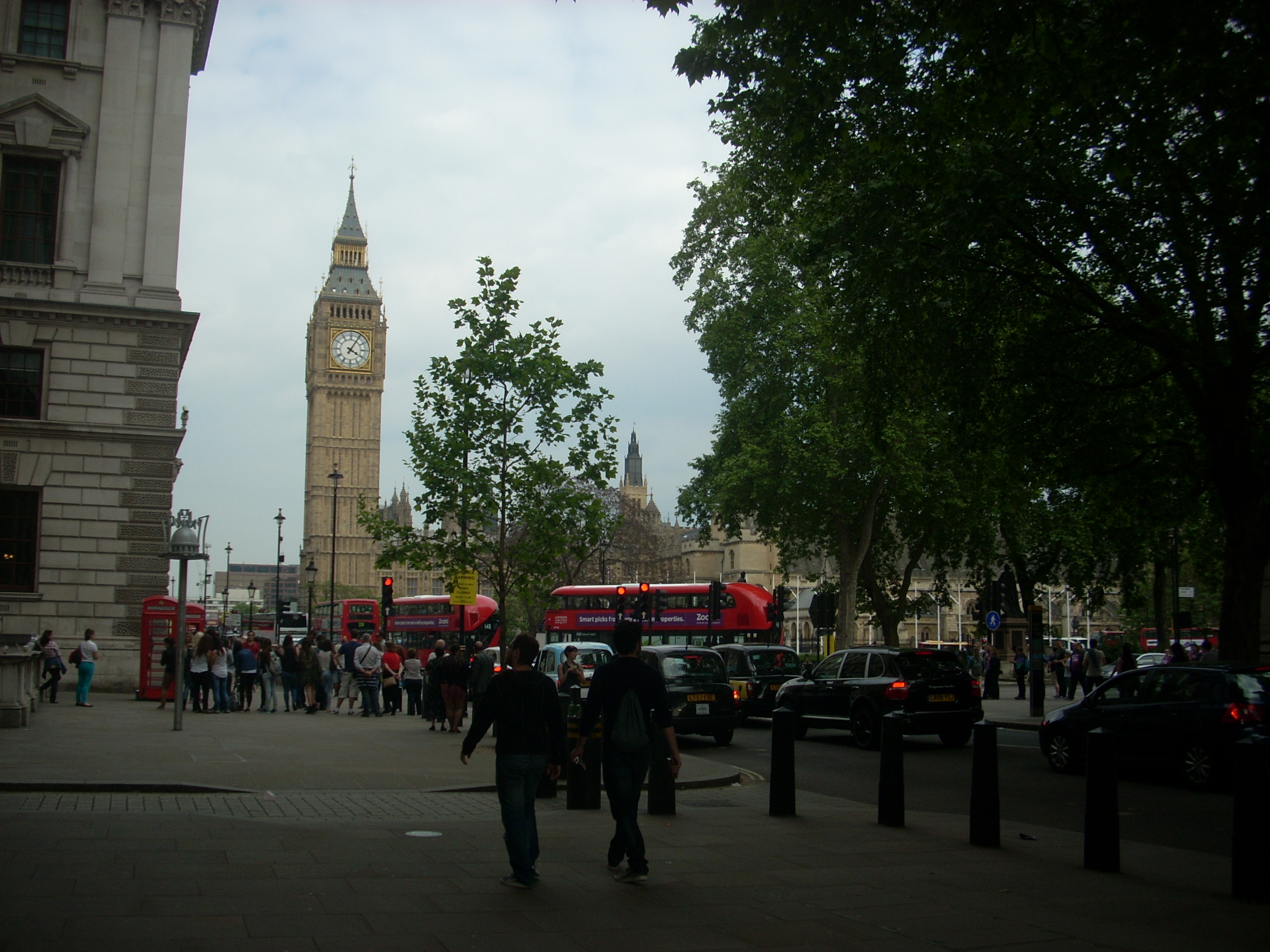
Of course I was aware that I, just like them, was a tourist in London. And I realized that while I tried to remain aware of my surroundings, it was possible that at some point when I paused to snap a picture of the London Eye or of Big Ben, I might have—unintentionally, of course—stood in someone’s way as they tried to get past. I could have been an annoyance to a Londoner or a few as they rushed to get to work, or home or to meet someone. I, however, didn’t have any appointments to get to. I merely wanted to make sure I could make the most of my time in England’s glorious capital. I didn’t want to miss out.

DSCN7943

When choosing where to go on vacation, London was an easy decision. I’d been only once before, 10 years ago, and loved every inch and second I experienced there. Of course I had barely scratched the surface, merely dipped my toe in the water. So I wanted to go back. I yearned to go back. But I also wanted to see more of England than just its biggest city.

A couple of years ago, I read about the Larkin Trail, a self-guided tour of landmarks related to the life and poetry of Hull-based poet Philip Larkin. There is much to say about my time in Hull, about following in the footsteps of a poet whose work I greatly admire. But those words are not meant for this post. Larkin’s Hull deserves its own space. So that will be put on hold for later. This post is for London.

Continue reading

On The Goldfinch and the value of savouring books

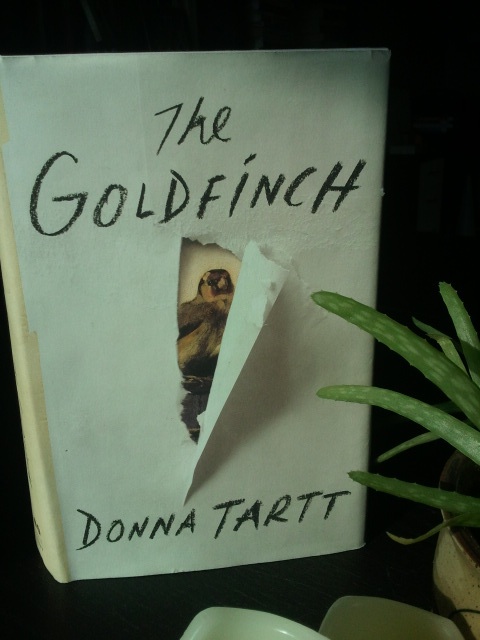
Every now and then, I’ll hear about a book that’s getting a lot of buzz. I’ll decide to read that book, trying to keep my expectations low for fear that it won’t be what I’d hoped. But Donna Tartt’s The Goldfinch exceeded my expectations. It’s not just because Tartt created a great story or wrote beautiful prose. Rather, I liked the book so much because both of these elements were crafted so exquisitely.

The fast-moving plot kept me turning pages when I should have gone to bed. But the language caused me to pause, think and feel, to climb out of myself and into the world of protagonist Theo Decker. I can’t remember the last time a book so strongly made me both want to speed up to find out what happens and slow down to relish in the writing.

My only regret is that I reached the end of The Goldfinch while reading in bed one night, and I had to try to fall asleep when all I really could do (and all I wanted to do) was stay awake and think about the book.

SAMSUNG

It’s been almost a week since I finished reading The Goldfinch. I haven’t started another book yet—which is unusual for me—for no other reason than I am still steeped in it, not ready to let it go, returning several times to the last 20 pages or so to reread and resubmerge myself in it.

It’s when you have a reading experience like I did with The Goldfinch that you realize how powerful literature can be. The characters are seen so clearly. You can feel their presence beside you. You’re not being told someone’s story; you’re there living it with them.

I know many readers have pledged to read 50 books this year, but it’s just not something I can get behind. Maybe I’ll read less than 50; maybe I’ll read more. But I don’t see how the amount of books read should be more important than the experiences we have with them. If your focus is on the quantity of books, or on the speed of getting through them, you risk missing something that might hit you in a way you hadn’t imagined if only you gave it the chance.

It can be tempting to read as much as possible. There are so many books and so little time. But try to take a step back when you’re in the midst of the book. Savour the pages. And try to take a moment to let it all sink in when you’ve finished. Some of the greatest moments that come from a book can occur after you’ve turned the last page.