Musings on The Muse

20160821_203133

What I read

The Muse by Jessie Burton

What it’s about

In 1967, 26-year-old Odelle Bastien has taken a job as a typist at the Skelton Art Gallery in London, England, after moving from Trinidad a few years earlier. Soon after starting to work in the gallery, Odelle encounters a painting that connects her with southern Spain in 1936. Odelle is compelled to piece together the mystery behind the subject of the artwork, the artist who painted it and the story of how it ended up where it did. 

The novel follows two narratives–one taking place in 1967 and the other in 1936–and demonstrates the power of art and how art is bigger than, and separate from, the artist.

How I got my hands on it

I first heard about Burton through the Twitter account of her literary agent, Juliet Mushens, when Burton’s first novel, The Miniaturist, came out two years ago. The Miniaturist received much acclaim, but I didn’t read it because the premise didn’t interest me. But when I started hearing things about The Muse, it piqued my interest. I bought my copy at my favourite independent bookstore.

Things I liked about it

I love stories that show interconnectivity between people, time periods or geographical locations, and this book does all three. What’s more, the story makes these connections through discussing art–an ekphrastic tale of sorts. Also, Burton does an excellent job of placing the reader in two separate time periods and locations; there’s a different feeling and landscape to each narrative.

I also like that while Odelle and the reader put together the story of the painting, not all details are left neat and tidy. It makes for a satisfying ending that’s also realistic.

You’ll want to read it if…

You might enjoy The Muse if you’re a fan of art, mysteries or historical fiction. And if you like all three, that’s even better.

Recommended refreshments

Gin and tonic with a slice of lemon. That’s what Odelle and her new boss partake in when they have lunch during Odelle’s first week at the gallery. And, really, art and libations are a classic pairing.
Book-browsing in Boston

I have a thing for Boston. The first time I visited was in 2012. I recently went back and spent a few days in this beautiful city.

One of the reasons I love Boston is for its literary history and the continued appreciation for the written word the city seems to have.

The last time I visited, I took a tour of the public library, joined a literary walking tour and went up to Cambridge to see Harvard and go to the Harvard Book Store. I didn’t get a chance to do those things this time around, but I did do some book-browsing at three great bookstores and one pop-up library.

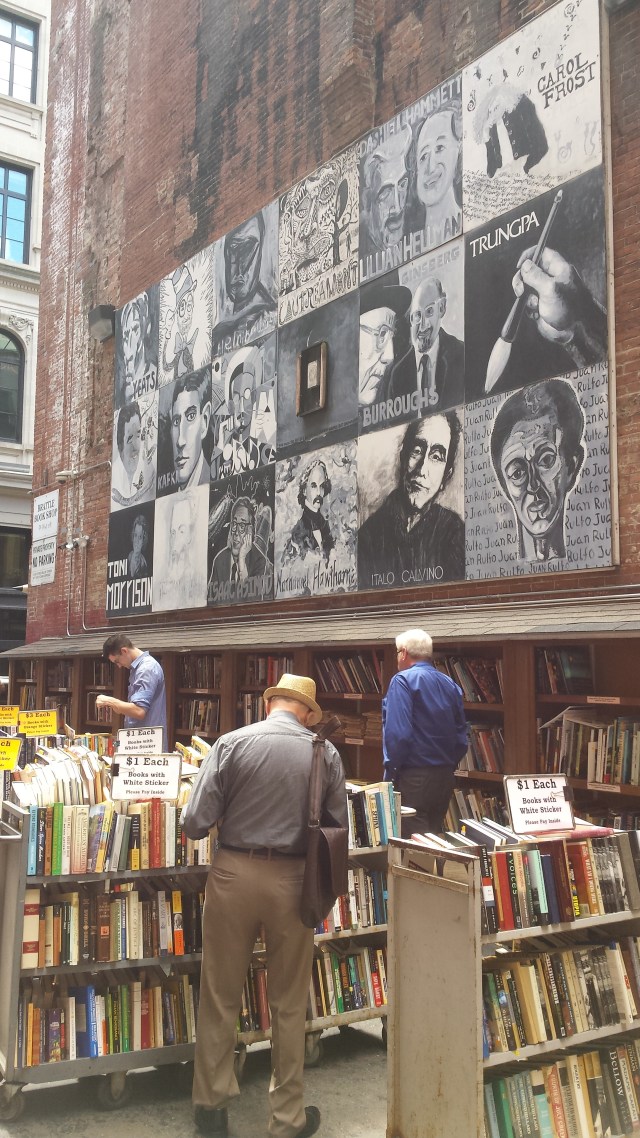
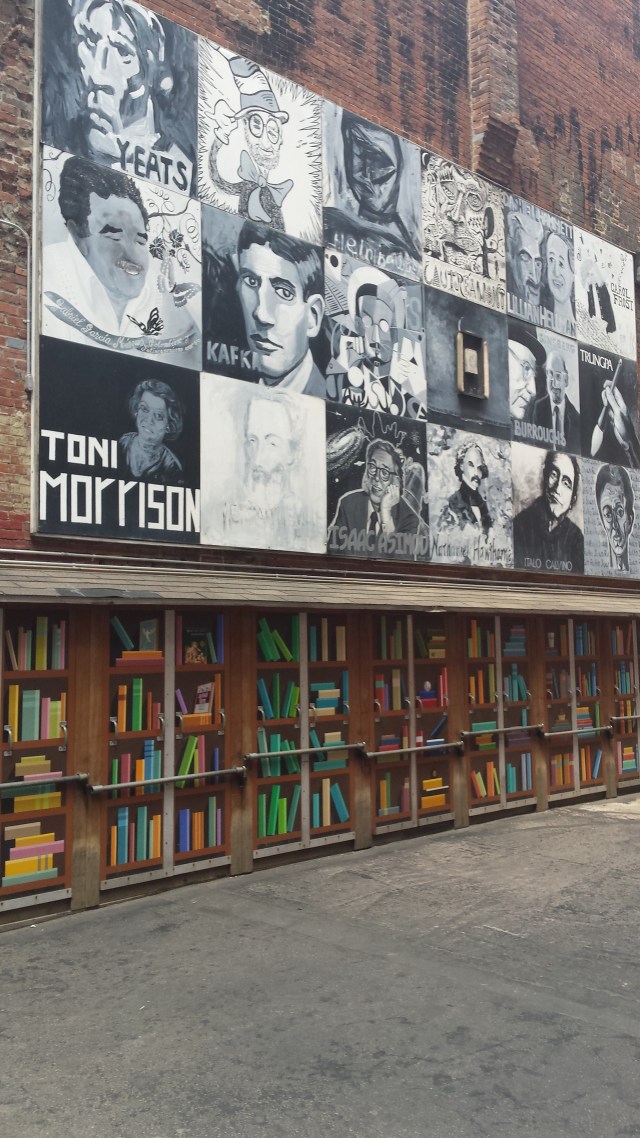
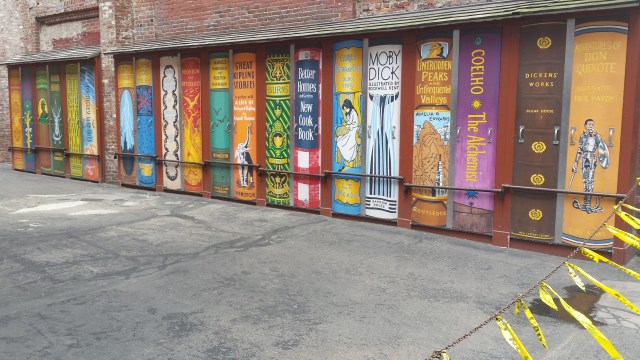
My first stop was Brattle Book Shop, a famous used and antiquarian bookstore. I went even though I knew it would be closed. The shop has an outdoor section, and I wanted to get a look at the artwork. The mural is visible at all times, but the doors painted with images of books and book spines are only shown when the shop is closed, as these are the doors that lock up the books.

20160807_132129

Brattle Book Shop mural

20160807_132203

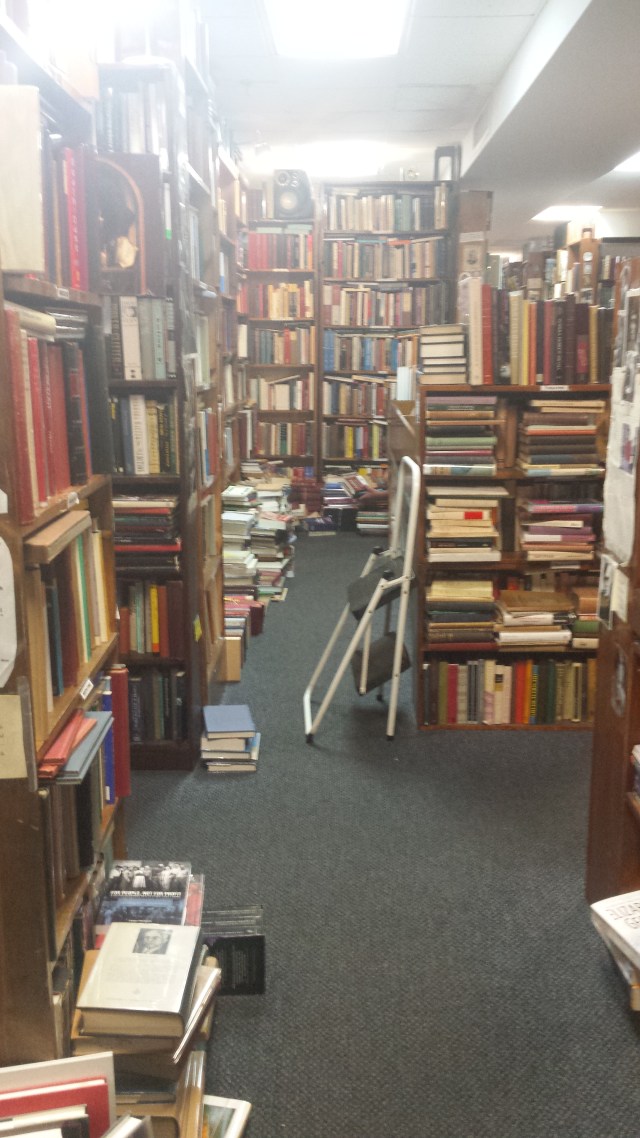
I did, of course, return to the shop when it was open.

20160808_144709

20160808_140215

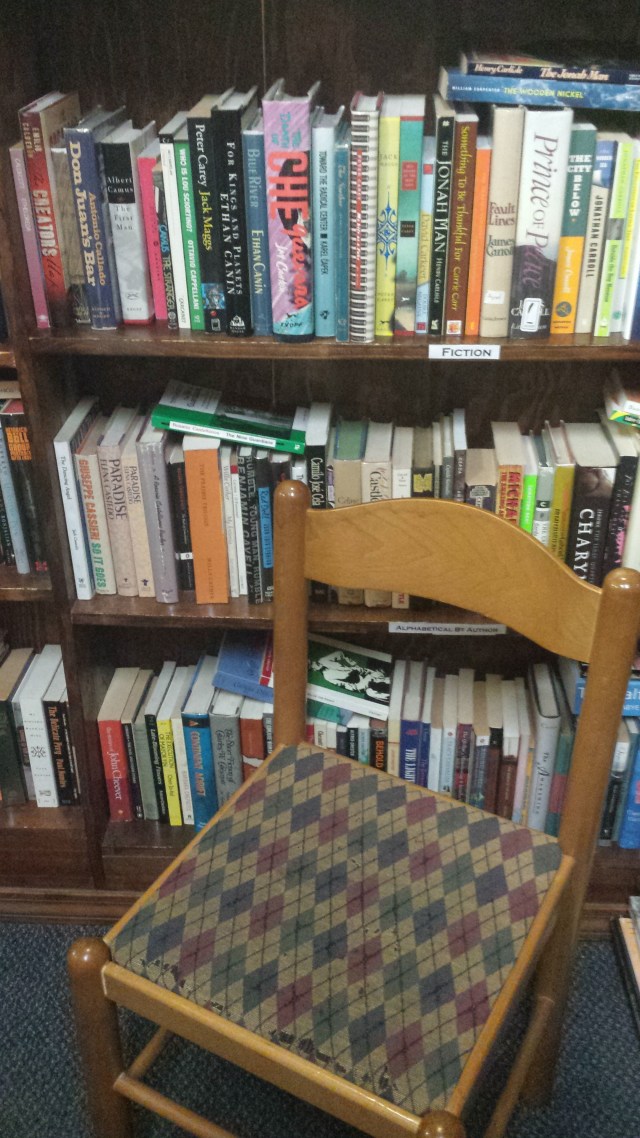
Then I headed over to Commonwealth Books, another store selling used books. It’s not as easy to find as Brattle, as Commonwealth is down an alley, but there are plenty of books to look through when you arrive.

20160807_162310

20160807_162000

20160807_160840

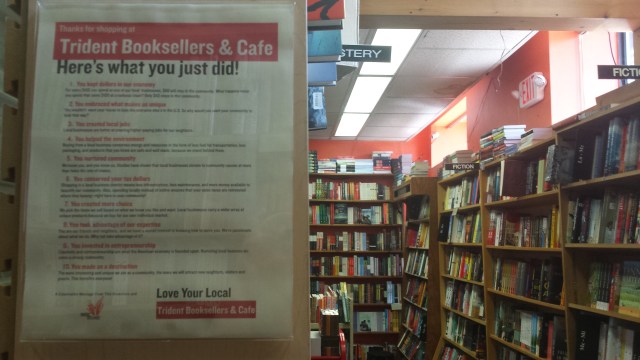
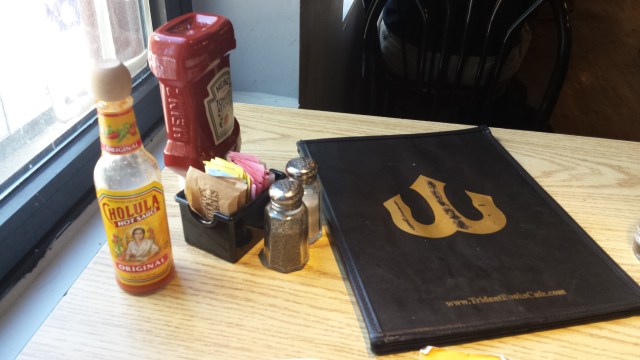
The only bookstore I visited that sells new books was Trident Booksellers & Cafe, a really cute shop in the Back Bay area. I even had lunch in the upstairs cafe.

20160808_130513

20160808_11180220160808_115737

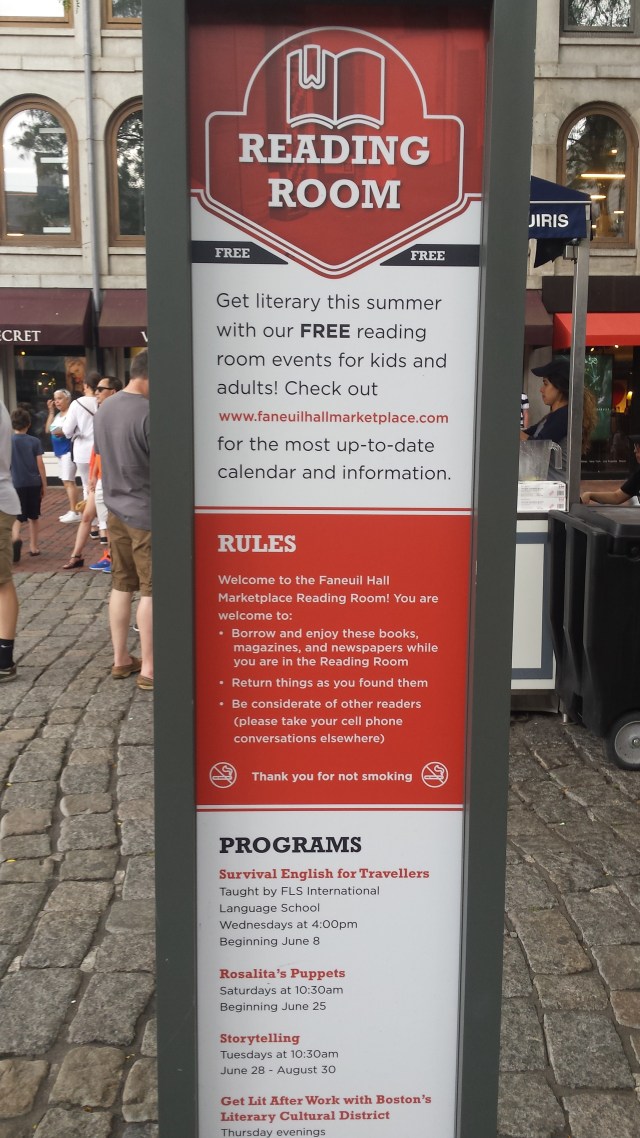
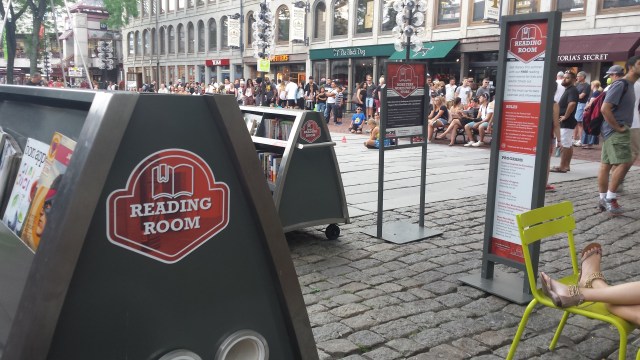
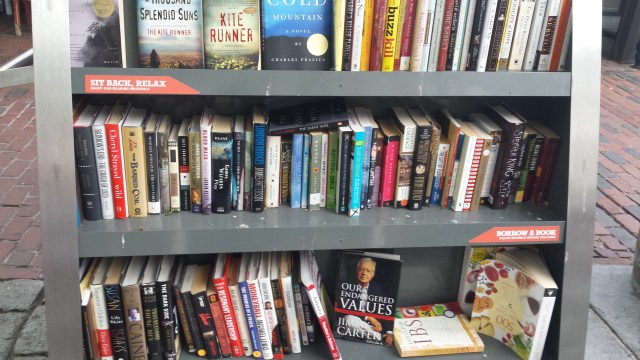
I also got to do some book-browsing when I wasn’t expecting it. I went to the very touristy Faneuil Hall/Quincy Market area and stumbled upon a small library out in the square. It made me smile to find it there.

20160807_16515720160807_16513620160807_165231

Next time you visit a new place, maybe skip the museums and galleries and just do some book-browsing instead. Admittedly, it might end up costing you more than the price of museum admission if the book-browsing excursions turn into book-buying excursions. Set yourself a limit so you’ll (hopefully) have some cash left in your wallet by the time you head home.

The Girls: a tale of teenage loneliness and grisly murder

20160729_163907

What I read

The Girls by Emma Cline

What it’s about

This debut novel follows 14-year-old Evie Boyd during the summer of 1969 when she is drawn to a group of girls—and one in particular—who belong to a cult. The story is inspired by the Manson family and the murders they committed, but it’s about more than that: Most notably it’s a story about teenage loneliness—of wanting to be seen by someone, anyone—and it explores the dynamic of female relationships.

How I got my hands on it

The Girls came up in conversation at work. When I mentioned I was interested in reading it, a coworker was nice enough to lend me her copy.

Things I liked

All I really knew about this book before I read it was that it was about a young girl who joins a cult and that it was inspired by the Manson family. That premise intrigued me. But I didn’t expect that I would enjoy Cline’s style of writing as much as I did. While she may have overdone it in places, many of her metaphors and descriptions were beautiful.

The structure of the book is also worth mentioning. The story interweaves the present—where a middle-aged Evie reflects on the past—with the summer of 1969. The parts of the book that take place in the present are not as interesting or as powerful as the parts that take place in the past, but Cline gets the balance right. And when we are in those present-day sections, Evie feeds us tidbits of details of what ends up happening, providing bait that I eagerly bit into.

You’ll want to read it if…

If, like me, you’re fond of coming-of-age stories, you’ll like this book. This is also a good read if you’re someone who likes psychological books—if you like to try to get into the mind of someone who does something you can’t fathom.

And if you’re avoiding it because of its gruesome inspiration, I’d ask you to reconsider. The story is really more about searching for identity, looking for a place to belong and trying to connect with another person.

Recommended refreshments

The first thing that comes to mind is a tall glass of OJ. This might be partly because of the California setting, but there are a few mentions of orange juice in the book. Granted, usually it’s mentioned to remark upon its absence (someone going to get orange juice but not bringing it back, a description of a splash of OJ in a glass filled with vodka). Maybe that’s symbolic of the absence of sunshiny optimism, or the disappearance of the innocence of youth. Or maybe I’m giving it too much thought. In any case, the pot of Earl Grey tea seen in the above photo suited me just fine, so that’s an option, too.

A little disappointed with A Little Life

20160717_101554

What I read

A Little Life by Hanya Yanagihara

What it’s about

A Little Life follows four friends who meet in college and move to New York after leaving school. The story centres around Jude, whose life is filled by one horrific experience after another, and his struggle to endure the traumas he faces. The people closest to Jude try to help him survive.

How I got my hands on it

Sometimes I like to go to the bookstore and pick something out on a whim. Other times, there’s a title I’ve heard and read so much about that I need to see what all the fuss is about. With A Little Life, it was the latter.

I had been excited to read this one for a while, as I’d heard how readers couldn’t put it down, how people were having such emotional reactions to it that they couldn’t go to sleep. Sometimes books that make me cry my eyes out are just what I’m looking for. So when I had some vacation time coming up, I went to my favourite independent bookstore and picked up a copy.

What I liked (and what I didn’t like)

The writing is set a good pace. Even though A Little Life is 800+ pages, it has taken me longer to read shorter books. The subject matter might be dark and heavy, but the writing isn’t dense.

But even though the story held my attention, I mostly did not like this book. This was partly because I was expecting (and looking forward to) a story about four friends and the dynamics of their friendship, and it turned out to be mostly about Jude and how the other three friends try to help him survive all the terrible things that happen to him.

Also, while awful things happen to Jude, I just didn’t sympathize with him. I was so conscious that I was reading about a fictional character. I didn’t connect with him the way I do with protagonists in books I love, where I feel as though the character is a real person I know.

However, I admit that, for a book I didn’t like all that much, I’ve definitely been thinking about it. Mostly I’ve been trying to figure out what other people saw that didn’t resonate with me. This hasn’t changed my feelings about the book, but it’s different from other books I don’t care for, when I don’t give it another thought after turning the final page.

You’ll want to read it if…

I’m tempted to say that you’d like A Little Life if you like depressing books, but I’m not sure that’s enough. I mean, I like depressing books, too. Thomas Hardy’s Jude the Obscure is a perfect example of this. (Is it a coincidence that Yanagihara chose the same first name for her protagonist?) But I can say with certainty that you shouldn’t read this if you don’t like depressing books. It’s pretty bleak.

Recommended refreshments

There are several mentions of food in A Little Life. Jude bakes and cooks and even works in a bakery at one point. There are descriptions of Thanksgiving dinner and other meals. But with some of the disturbing subject matter, it’s hard for me to recommend enjoying any of the foods mentioned in the book while you read it. Instead, you might try a peppermint tea for a bit of comfort and to help settle the stomach.

The beauty of Wild Dogs

What I read

Wild Dogs by Helen Humphreys

What it’s about

A group of strangers have something in common: Their dogs have left their domestic lives and now roam in the wild as a pack. The group gathers near the forest each evening to call out to their dogs, hoping they will come back home. When a tragedy occurs, the group is forced to question the meaning of their relationships with each other.

How I got my hands on it

I got a copy of Wild Dogs through the Toronto Public Library. I was looking for something to read with no particular title in mind, and I decided to see which of Helen Humphreys’ books were available. I’ve read a few other books by Humphreys, and I like her poetic and meditative style of writing.

I wasn’t sure about Wild Dogs when I first saw it. It sounded so different from a lot of Humphreys’ other books, which are often historical fiction set in England. But I’d read the other titles the branch had available and thought I’d give Wild Dogs a try. Turns out, this is my favourite Humphreys’ book I’ve read (and has increased my desire to continue to read more of her work).

A bit that I really liked

The story is told in three parts: the first is Alice’s perspective, written in the second person; the second part is broken into several other perspectives, written in the third person; and the third part returns to Alice.

Alice’s sections were my favourites. Part of the reason might be because writing in the second person isn’t as common first or third, so it makes that writing stand out. Expressing Alice’s perspective in this way creates a more intimate connection with the reader. It’s like reading someone’s letters or their diary.

Since I got this book from the library, I know I’m going to purchase my own copy so that I can underline, highlight and make notes in the margins. This is one of the reasons that no matter how much I support libraries, I will never be able to stop buying books.

You’ll want to read it if…

You will probably like this book if you fall into any of these categories, but you will love it if all of these apply:

  • You like dogs.
  • You enjoy beautifully written prose.
  • You appreciate nature.
  • You like books that will have you thinking about them after you’ve stopped reading.
  • You’ve loved someone…and/or a dog.

Recommended refreshments

There are several places in this book where the characters imbibe, and understandably so. A bit of bourbon or scotch would go well with this novel. Just be sure to stop at a bit. This book will likely get you ruminating and reminiscing, and, well, too much of anything usually isn’t good.