Literary cocktail classes at Toronto’s Famous Last Words

20170206_200714

If you’re a fan of the recommended refreshments section in my book reviews, you will like Famous Last Words, a newish bar in Toronto’s Junction neighbourhood.

This book-themed bar is cozy and adorable and has a full menu of cocktails made with a literary twist. It’s the perfect place to read or write. But my recent trip there wasn’t to do either of these things. I was there to take a literary cocktail class.

A couple of friends and I signed up for a class called The Roaring ’20s. We learned how to make cocktails that appear in The Great Gatsby (Gin Rickey, Mint Julep) as well as a couple of others from the era (The Last Word, Between the Sheets).

20170129_175213

A Between the Sheets sitting on the Scrabble-tiled bar.

The class wasn’t all about the cocktails, though. We talked about the connection the drinks have to The Great Gatsby and about the characters in the book. We also talked about prohibition–an interesting discussion about history.

Sometimes the recommended refreshments in my book reviews are simply what I think would create a nice reading experience for a particular book. But, where it’s suitable, I try to connect the refreshments to food or drink that appears in the stories. So I absolutely love that Famous Last Words does this by serving drinks that are featured in books. They aren’t limited to this, though. They also create drinks that are inspired by stories and authors.

20170206_200610

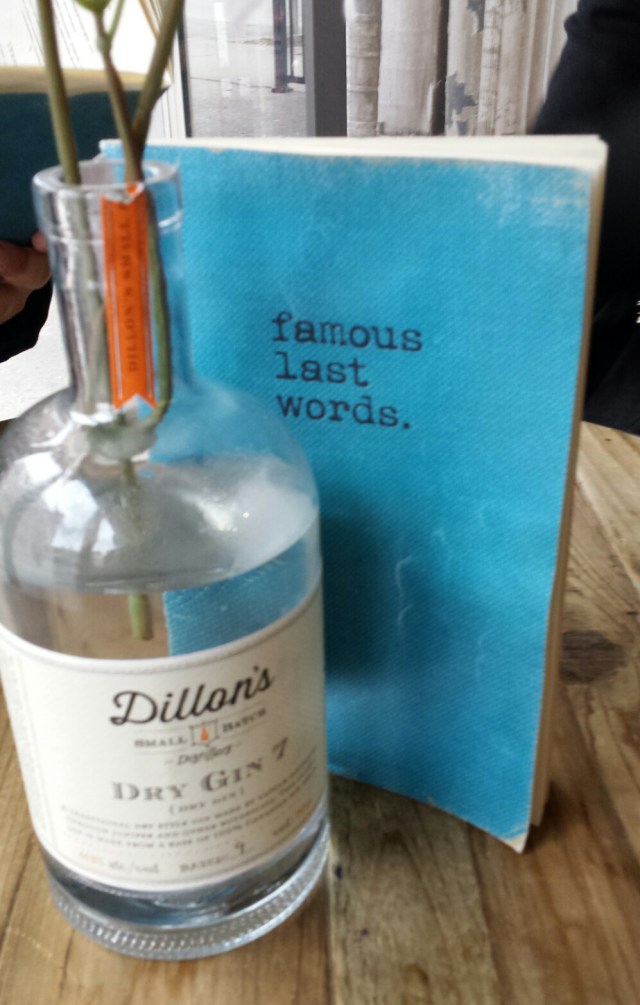
Can you spot the copy of Timothy Findley’s Famous Last Words amongst all these bottles?

There are still three classes left in this series of literary cocktail classes. Check out Famous Last Words’ event page to see what’s coming up. And even if you don’t feel like taking a class (but it really is a lot of fun), you can always head over to the bar with a book. You’ll definitely find a refreshment to complement whatever it is you’re reading.
Teddy Wayne’s Loner: a gripping and disturbing read

20170125_214130What I read

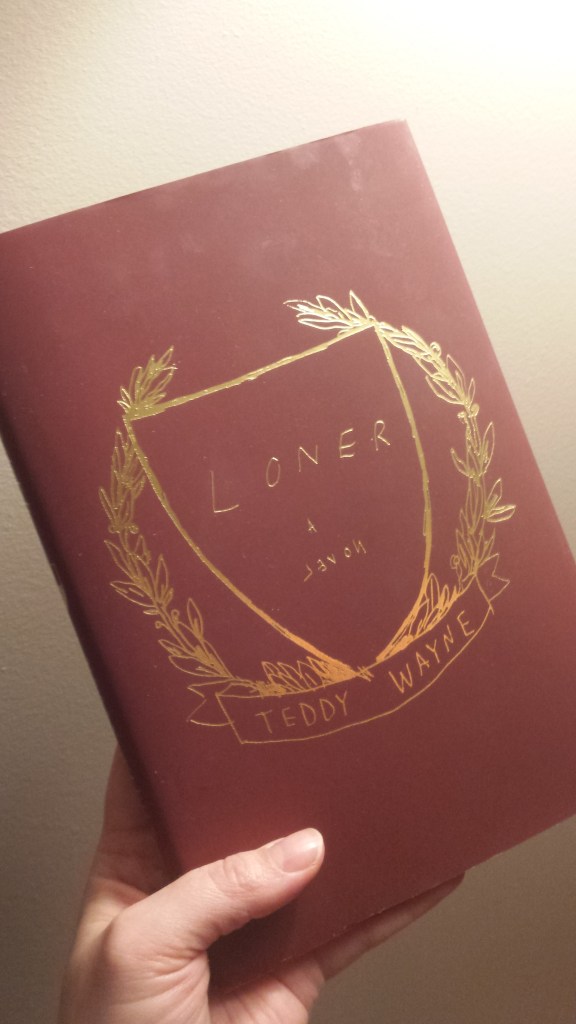
Loner by Teddy Wayne

What it’s about

Loner opens with narrator David Federman arriving to study at Harvard. While David spent high school getting good grades, he doesn’t have any friends to show for those years. He has basically been invisible. But now David has the opportunity for a fresh start, a chance to reinvent himself.

When David meets Veronica, he is convinced she will be his ticket into the new world he dreams of, and he is determined to get to know her. But Veronica doesn’t end up being quite who David thinks she is.

This novel explores the troubled and troubling minds of young adults, and it’s a frightening place.

Why I picked it up

I heard about Loner near the end of 2016, when I saw it in a Kirkus Reviews “best of” list. I like stories that take place in school and/or coming-of-age tales, so the genre appealed to me, and I also like protagonists who are outsiders. I bought a copy while browsing in Book City on the Danforth one wintry afternoon.

What I liked about it

I loved the way this story builds and transforms as you read. It starts off as being funny, and while humourous moments appear as the novel progresses, the story becomes more disturbing. It’s a powerful psychological portrait of the narrator in his formative years.

On a technical level, I liked the perspective Loner is written in. Wayne chose to write using the second-person perspective. Second-person perspective is less common than first or third because it can be awkward. But I love second-person perspective when the author gets it right, and Wayne has done just that.

You’ll want to read it if…

Pick up Loner if you like books that get you inside the minds of characters and books that have you thinking about them for a while after you’ve turned the last page. But you’ll have to be okay with reading disturbing subject matter. I finished this book right before I went to bed, and I wouldn’t recommend that. I imagine it would be better to finish reading it in the daytime.

Recommended refreshments

These kids have gone away to school and are living away from home for the first time. There is plenty of drinking in dorm rooms going on. I recommend mixing some vodka and club soda, as a few of the characters do during a blackout, or just grab some cheap beer.

How to create the coziest winter reading experience

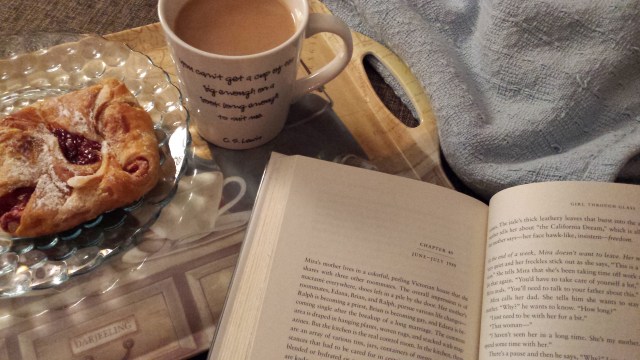
20170119_213409Winter can be a bit of a downer. Even when it’s not freezing and snowy, January and February are just, well, blah. But instead of waiting for the seasons to change, embrace the opportunity to stay inside and hunker down with a good book. Here are some tips for creating the ultimate, coziest reading experience.

Slip into something more comfortable

If you’re not the type of person who puts on your comfy pants as soon as you get home, you’ll want to change into your coziest gear. Whether it’s pyjamas, a hoodie and stretchy pants or some sweats, just make sure it’s something you feel relaxed in.

Choose the right setting

Set yourself down in a comfy armchair, or maybe you prefer to curl up on the couch. Wherever your favourite reading spot is, keep a blanket close by in case you get chilly and consider whether you’d like some pillows to prop you up or to lean against.

If you live with other people, make sure you have some privacy or–better yet–get them to join you in your cozy reading experience. Just make sure no one can interrupt you with questions or by watching something on Netflix. Don’t like reading in silence? Try putting on some soft background music or use Noisli to create your preferred ambience.

Know your optimal reading time

Your optimal reading time will be when you’re fully awake, so you can read without drifting off, but not when you are so energized that you can’t sit still. My personal favourite times are first thing in the morning and in the evening after dinner, but maybe a weekend afternoon works best for you.

Also consider how much time you can dedicate to your reading experience. If you’ll need to be out the door soon and have to watch the clock (or check your phone), it will be hard to stay in the moment.

Have treats nearby…

Treats are always a good idea, especially when they accompany a good book. Make sure those treats are close by. You won’t want to interrupt your reading to head to the kitchen if your tummy starts to rumble (or if you are just craving something delicious). I love a good pastry, but other baked goods (sweet or savoury), chocolates or toast with butter and/or jam are also great choices.

…and something hot to drink

No cozy winter reading experience is complete without something to sip. My favourite is a nice cup of tea, but coffee, hot chocolate or apple cider will all work wonderfully. Just keep  in mind the amount you are drinking; the urgent need for a bathroom break doesn’t feel very cozy.

Ignore everything else

Do not feel guilty for not vacuuming. Do not think about what’s on tomorrow’s to-do list. Put your phone on silent or leave it in the other room. Allow yourself to be immersed in whatever you are reading.

So don’t be sad that it’s winter. Grab a pastry and a book and curl up under a blanket. It’s time to get cozy.

How my parents raised readers

Earlier this week, I went to the Toronto Reference Library to hear Will Schwalbe talk about his new memoir, Books for Living. At one point, he mentioned that his parents gave him and his siblings the greatest gift anyone can give someone: a love of reading.

This comment made me reflect on my own upbringing and how my parents managed to instil a love of reading in both my brother and me. Here are a few ways I think my parents managed to do just that.

They filled the house with books

My brother and I had our own bookshelves in our respective bedrooms, but there were books in the common areas of the house, too. There was a fair-sized bookcase in the living room and several others in the finished basement, all filled with books–everything from the classics to mystery novels to the Encyclopedia Brittanica.

As a child, most of these books were above my reading level, but nothing was off limits to us. We could pick up any of the titles as we pleased. Even when I was too young to understand (or have an interest in) Thomas Hardy or Dylan Thomas, I still liked to run my fingers across the spines or flip through the pages of the books.

They read to us

Sometimes we’d sit on the couch together, and my parents would read a book to both me and my brother (Charlotte’s Web comes to mind). Other times, they would read to us in our bedrooms when we were being tucked in. Mom and Dad would take turns reading to each of us. I can’t say for certain, but I believe this happened every night–at least until we were too cool for it and preferred to read on our own.

They took us to the library

Our family visited our local branch of the public library frequently. It was something to do on a weekday evening or a weekend afternoon. Just going to the library and hanging out for a bit was fun, but of course we’d always bring a bundle of books home with us.

They gave us books as gifts

To this day, it’s been a tradition to give books as stocking stuffers in my family. It’s something we still look forward to: We all know we’re getting books; it’s just a question of which ones. Growing up, this small gesture helped ingrain in us the idea that books have a lot of value to offer. And not only did this ritual give us the joy of receiving books, but it taught us the joy of giving books, too.

Books can inform and educate, offer comfort, help us understand others and help us feel understood. So Schwalbe is right. A love of reading is the best gift you can give someone. And it’s something that, no matter what happens in life, no one can take away from them.

Harmless Like You packs a punch

20170102_103657

What I read

Harmless Like You by Rowan Hisayo Buchanan

What it’s about

After the death of his father, Jay travels from Connecticut to Berlin to find Yuki, his mother whom he has not seen since she left when he was a toddler. The novel alternates between the perspectives of Yuki and Jay. Yuki’s story spans her teenage years in the 1960s up to the point of her leaving in the 1980s, and Jay’s story takes place in the present.

Yuki has lived in New York since she was a child, and when her father’s job returns the family to Japan, Yuki decides to stay behind. In the subsequent years, she struggles with her identity and with her dream to become an artist.

Jay is an art dealer married to the love of his life, Mimi. But after the birth of their daughter, he begins to question his relationship with his wife and child.

This novel tells a story of the search for identity and place of belonging while connecting it to the art world. It also looks at what we inherit from each other–the pain, conflict and harm that is passed down in a family.

Why I picked it up

This is another book I read about online, but I can’t remember where (I should keep better track of this). I think it was in a “Best of 2016” list somewhere. Then I read that Becky Toyne recommended this for readers who liked Imagine Me Gone (which I loved), and that increased my desire to read Harmless Like You.

In mid-December, I was shopping for books to give as Christmas gifts, and when I saw the cover of Harmless Like You staring at me, I decided to buy myself a Christmas gift, too.

What I liked about it

It’s not surprising to learn that Buchanan is an artist herself. This is not only because of the book’s art theme (and discussion of colour), but it’s also apparent through the style of the writing. It’s as though Buchanan went in with a big brush to tackle difficult themes and an interesting plot, and then went in with a smaller brush to add in the finer details (the sentences and paragraphs are beautifully crafted).

Yuki’s sections are told in the third person, while Jay’s are in the first. Because of this, it feels like there is a bit of distance created between Yuki and the reader, but, at the same time, this third-person narration almost gives us more insight into what she’s going through.

I also really liked the examination of parenthood in this book. It was smart of Buchanan to include various types of parents, such as Yuki’s parents and Yuki’s high school friend’s single mother. But it was most interesting to read of the struggles experienced by Yuki and then Jay when they each become parents.

You’ll want to read it if…

I agree with Becky Toyne that fans of Imagine Me Gone will like this book. It’s also a great choice if you like literary fiction, art and/or stories about complications within families.

Recommended refreshments

I think the jasmine tea that Yuki drinks (and gets her boyfriend, Lou, drinking, too) suits the book quite well. But American diners also make several appearances, and I found myself craving a slice of the cherry pie that Yuki’s friend Edison often orders after their life-drawing classes. So why not have both?