The Lexicographer’s Dilemma shows us English is a beautiful mess

What I read

The Lexicographer’s Dilemma by Jack Lynch

What it’s about

This book examines how the English-speaking world has arrived at an idea of what “correct” English looks like. Lynch demonstrates that we shouldn’t be so concerned about using English correctly but rather we should be concerned about using English appropriately. And what’s appropriate can change depending on circumstances.

As Lynch takes us through the history of modern English, he provides lots of fascinating information on key figures (Samuel Johnson, Noah Webster, Peter Mark Roget, to name a few). Central to the book is the question of whether dictionaries should be prescriptive or descriptive, and Lynch explains the different views some of these key figures had regarding this.

How I got my hands on it

This Christmas I received some nice books and bookish gifts. This book was one of those gifts, and it was tucked neatly into my stocking. I can’t say for sure who it put it there, but I have a strong suspicion (Santa, of course).

A bit that I really liked

As much as I enjoyed reading about Johnson and the story of how this unlikely character created one of the most famous English dictionaries—I mean, I visited the house in London where he worked on A Dictionary of the English Language, so I’m a bit of a fan—the section on John Dryden stands out just a bit more for me. I’ve finally figured out who I can blame for this nonsense about not ending a sentence with a preposition and this BS about it being wrong to split an infinitive! Dryden was trying to make English follow the rules of Latin, but English isn’t Latin, guys.

Bonus bit: I got a real kick out of Lynch talking about people having issues with abbreviations in texts or social media. Don’t like it when people use “IMHO” or “obvs”? Well, then surely you must never say “AKA” or “fridge” or “exam” or “phone,” right? Thank you, Mr. Lynch, for pointing out this hypocrisy. It made me smile.

You’ll want to read it if…

You’ll probably like this book if you are any kind of word nerd. Proofreaders, editors, writers, people who read the dictionary for fun—you will love this book. But if you’re looking for a book that’s going to back up your rigid views on how the English language should work, you might not enjoy reading this. It will probably show you how silly you are being. I mean, I think it would be good for you to read it, but you might not want to.

Recommended refreshments

Any reading session is more enjoyable with snacks and drinks. For The Lexicographer’s Dilemma, I recommend consuming copious amounts of tea, and not just because tea and books always go well together. Rather, I suggest you drink this tea in honour of Samuel Johnson, as he was known to consume several cups a day. Imagine how many pots he must have gone through working on that dictionary! So, yes, tea is appropriate. And also maybe a bowl of alphabet soup?
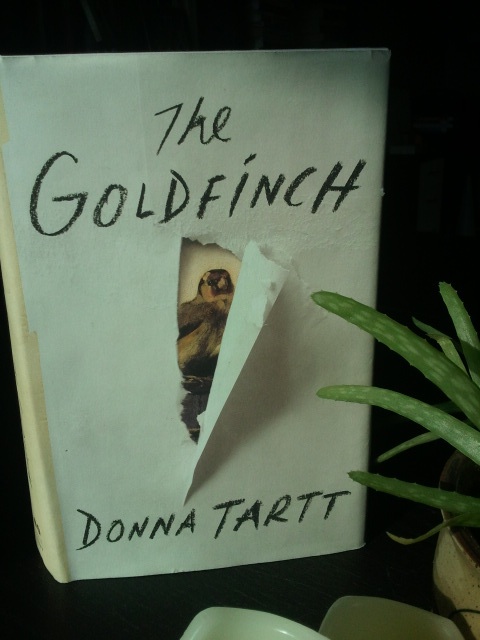
 

On The Goldfinch and the value of savouring books

Every now and then, I’ll hear about a book that’s getting a lot of buzz. I’ll decide to read that book, trying to keep my expectations low for fear that it won’t be what I’d hoped. But Donna Tartt’s The Goldfinch exceeded my expectations. It’s not just because Tartt created a great story or wrote beautiful prose. Rather, I liked the book so much because both of these elements were crafted so exquisitely.

The fast-moving plot kept me turning pages when I should have gone to bed. But the language caused me to pause, think and feel, to climb out of myself and into the world of protagonist Theo Decker. I can’t remember the last time a book so strongly made me both want to speed up to find out what happens and slow down to relish in the writing.

My only regret is that I reached the end of The Goldfinch while reading in bed one night, and I had to try to fall asleep when all I really could do (and all I wanted to do) was stay awake and think about the book.

SAMSUNG

It’s been almost a week since I finished reading The Goldfinch. I haven’t started another book yet—which is unusual for me—for no other reason than I am still steeped in it, not ready to let it go, returning several times to the last 20 pages or so to reread and resubmerge myself in it.

It’s when you have a reading experience like I did with The Goldfinch that you realize how powerful literature can be. The characters are seen so clearly. You can feel their presence beside you. You’re not being told someone’s story; you’re there living it with them.

I know many readers have pledged to read 50 books this year, but it’s just not something I can get behind. Maybe I’ll read less than 50; maybe I’ll read more. But I don’t see how the amount of books read should be more important than the experiences we have with them. If your focus is on the quantity of books, or on the speed of getting through them, you risk missing something that might hit you in a way you hadn’t imagined if only you gave it the chance.

It can be tempting to read as much as possible. There are so many books and so little time. But try to take a step back when you’re in the midst of the book. Savour the pages. And try to take a moment to let it all sink in when you’ve finished. Some of the greatest moments that come from a book can occur after you’ve turned the last page.

How did your bookshelves get so full?

I acquired many of my books in a similar fashion: I bought them from a bookstore, either on a whim or as a planned purchase. But whenever I look through my books, I realize that some are special to me not solely because of their content, but also because of the memory of how they landed on my bookshelves. Here are a few stories behind the how I came into some of my books.

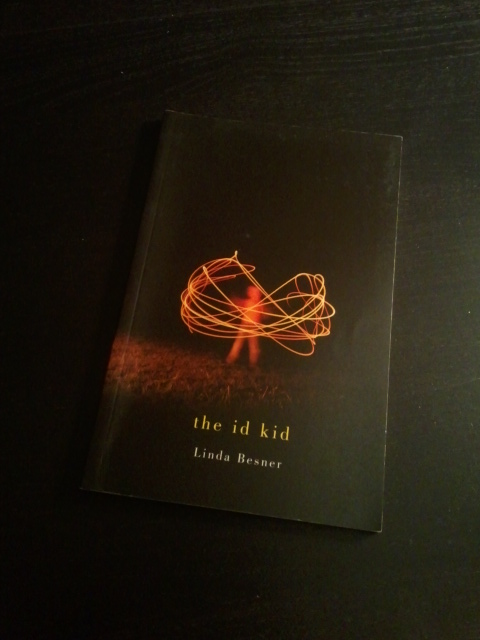
The Id Kid by Linda Besner

The Id Kid — Linda Besner

I like going to readings, but most of the time I go to see writers I already admire. But every now and then, I go and see writers I’ve never heard of, and sometimes end up discovering someone I really like. This was the case with Linda Besner. I saw her read at Harbourfront Centre a couple of years ago, and enjoyed her poetry so much that I bought a copy of The Id Kid and got Besner to sign it after the reading.

All the Pretty Horses by Cormac McCarthy

All the Pretty Horses — Cormac McCarthy

Cormac McCarthy’s All the Pretty Horses was one of the books on the docket for an American literature course I took in university. As with most of the books I was required to read, I picked up this copy at the campus bookstore. It was the first Cormac McCarthy book I read, and I liked it quite a bit. But it’s difficult to know if the impression it made on me was the writing itself or if it was because I noticed similarities to my grandfather’s life, as he was a cowboy in the time period the book is set in. When I finished the book, I told my grandfather about it, which opened up a dialogue about some of his other life experiences. I’m not sure I would have heard those stories otherwise.

Lullabies for Little Criminals by Heather O'Neill

Lullabies for Little Criminals — Heather O’Neill

Earlier this year, I borrowed Lullabies for Little Criminals by Heather O’Neill from the library. I enjoyed it so much that I kind of wanted my own copy, but it didn’t seem practical to go to the bookstore to buy a book I’d just read. When I found a used copy at a book sale a few months later for $1.50, I took it as a sign that it was meant to be mine.

A Glossary of Literary Terms by M. H. Abrams

A Glossary of Literary Terms — M. H. Abrams

While in university, many of my professors recommended A Glossary of Literary Terms, but it was never a required text for any of my courses. The number of recommendations made me curious, and I decided I needed to get my hands on it. When I looked for the book online, I learned it was out of print. So I went to eBay—where I often looked for things I wanted to buy in the early 2000s—and I bought a used copy. I ended up citing it in a lot of my English essays, too. I guess those professors really do know what they’re talking about.

Jude the Obscure -- Thomas Hardy

Jude the Obscure — Thomas Hardy

I bought Jude the Obscure at my neighbourhood bookstore, which is not much of a story. The more interesting (and perhaps a little embarrassing) story is why I decided to read this book in the first place. Years ago, I saw an interview with Jude Law on a late-night talk show. Law mentioned he was named after the main character in Hardy’s book, remarking that it was odd for his parents to name their son after a character who has such miserable experiences. And that sounded like a book I wanted to read. So I guess sometimes watching television can lead to reading more books.

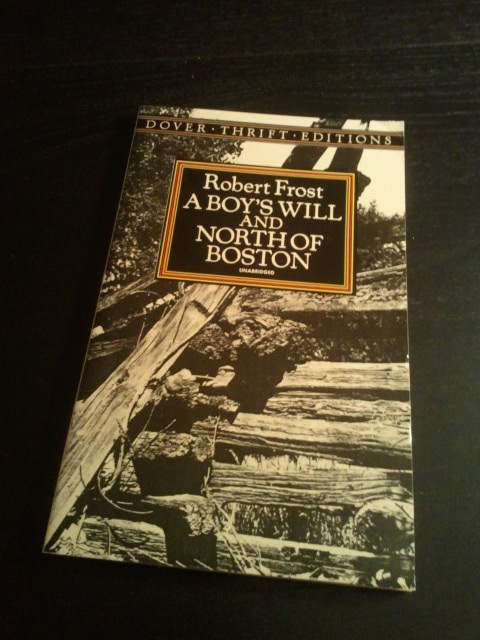
A Boy's Will and North of Boston -- Robert Frost

A Boy’s Will and North of Boston — Robert Frost

This book was given to me, but I’ve never met the gift-giver. The woman who gave me this book worked with my father when I was a teenager. I suppose my dad mentioned to her that I liked Robert Frost, and she gave him this book to pass on to me. I thought—and still think—that it was a very sweet thing to do.

Trainspotting -- Irvine Welsh

Trainspotting — Irvine Welsh

In high school, a friend gave me a copy of Irvine Welsh’s Trainspotting as a Christmas present. When I tried to read it, I had difficulty following because of the Scottish accent the book is written in. I ended up abandoning it, even though I absolutely loved the film. Years later, I realized that if I’d been able to tackle Chaucer, surely I could manage Welsh. I ended up liking the book even more than the film. I’m glad I gave this one a second chance.

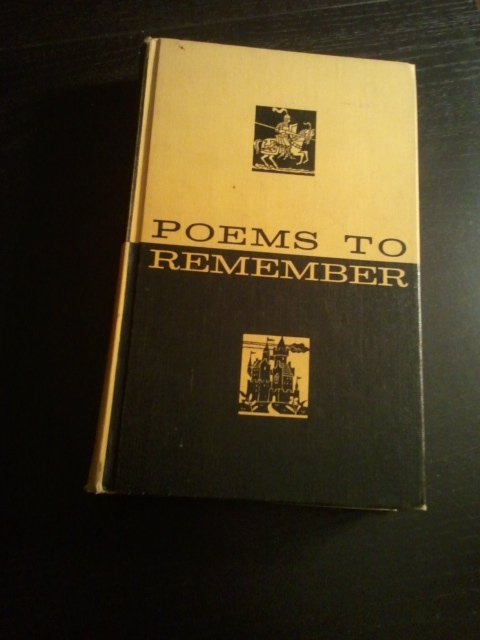
Poems to Remember

Poems to Remember

I grew up in a house that had a lot of books in it. It wasn’t uncommon for my parents, my brother or me to look through the family-room bookshelves for something to read. But a few of those books didn’t make it back to those shelves and ended up leaving the house when I did. You could say they’re stolen, but I prefer to say they are on extended loan. Besides, the name scribbled on the inside cover of this copy of Poems to Remember belongs to my uncle. Whether he gave it to my parents or whether they stole it before I stole it, I doubt my parents remember (or my uncle, for that matter).

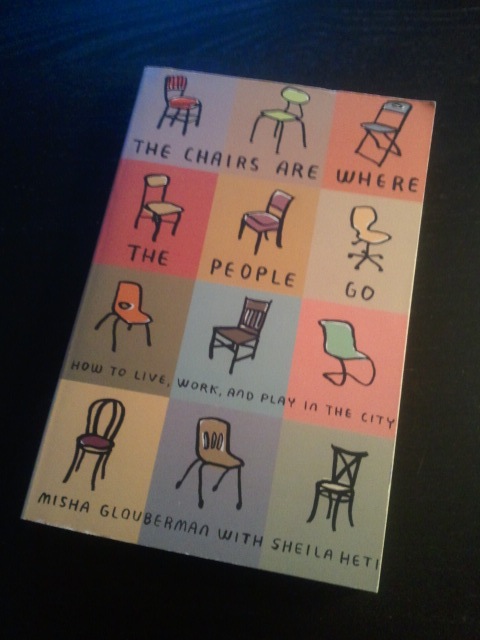
The Chairs Are Where the People Go -- Misha Glouberman and Sheila Heti

The Chairs Are Where the People Go — Misha Glouberman and Sheila Heti

Something that is really fun is when you win books. I haven’t won a lot of contests in my life, but the few times I have won mostly awarded me books. I won my copy of The Chairs Are Where the People Go from The Word on the Street book festival, when they ran a “guess the author” contest on Twitter a couple of years ago.

After looking over my shelves, I’ve realized my book collection needs more found books. If I take a trip to London, maybe I’ll find a book on the tube. It’s possible.

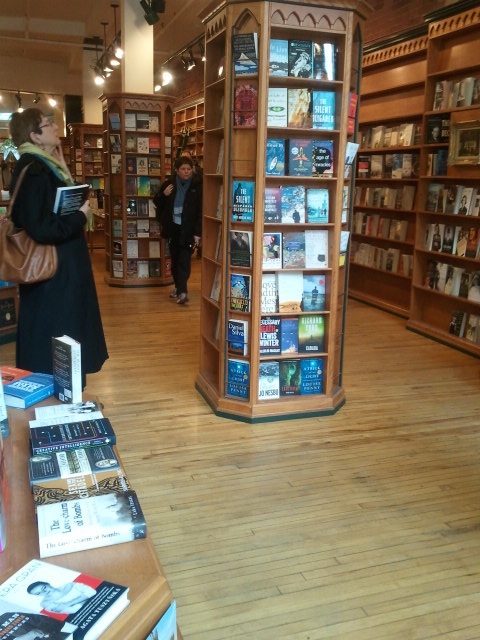
My final trip to Nicholas Hoare Books

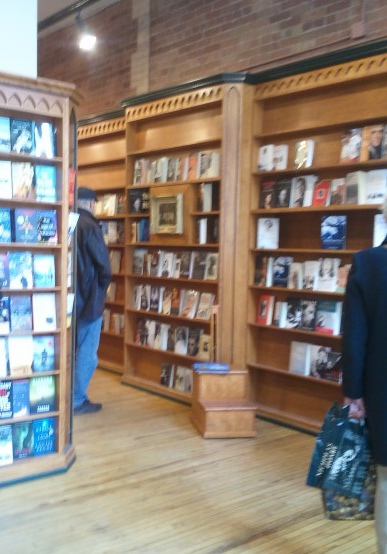
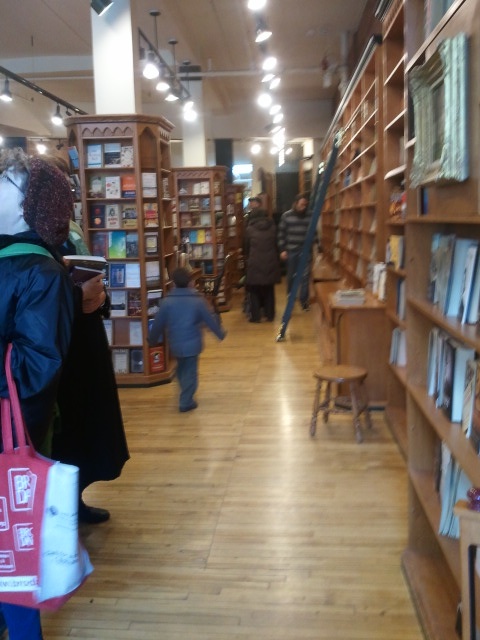
I know—I already wrote about the closing of Nicholas Hoare Books. But yesterday was the store’s last day of business, and it wouldn’t feel right if I didn’t share something about my final visit. So here are some pictures (and some words, too).

NH-exterior

SAMSUNG

There were quite a few people meandering through the store. I watched as they gathered their final purchases, said farewell to the staff and expressed their appreciation to Mr. Hoare himself.

SAMSUNG

The shelves have never looked so bare.

SAMSUNG

SAMSUNG

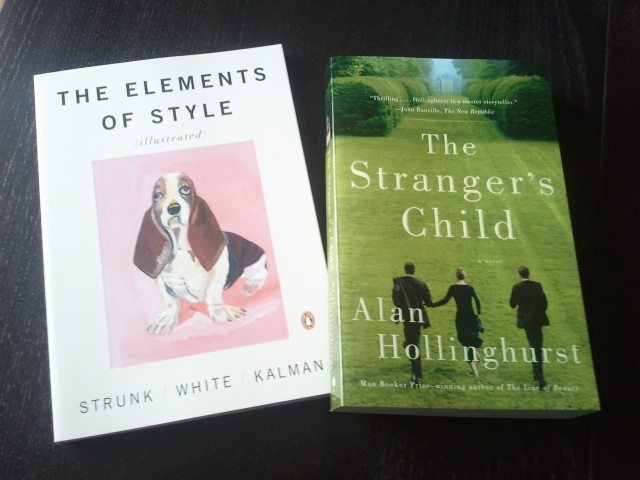
Even though nothing was discounted, several bibliophiles walked around with armfuls of books pressed against their chests. The measly two books I bought looked almost inadequate in comparison.

SAMSUNG

my final acquisitions

I’m used to finding a Nicholas Hoare bookmark tucked inside my purchase. Before I left the store, I looked in my bag to make sure one was there. After all, this would be the last time I’d receive a bookmark. I was happy to see the bookseller had slipped in a few.

SAMSUNG

bookmarks

I paused at the entryway before leaving, taking another look at all of the books and the people who were admiring them. I watched an elderly man seated by the window as he flipped through the pages of a hardcover. I watched a young boy as he rushed to find the children’s section at the back. I watched as customers and staff chatted and shared memories.

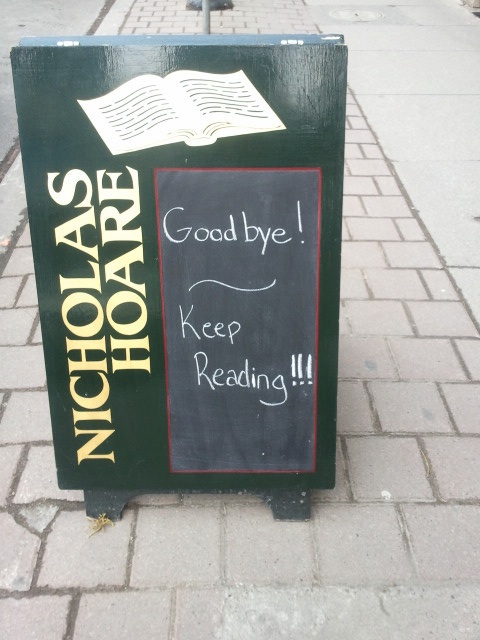
It was hard to walk out that door knowing it would be my last time doing so, but saying goodbye is never easy.

NH-sign

The rise and fall of Cuba Livres

There are many subjects I know little about, but one thing I do know is literature—or so I had thought. Earlier this week I attended CBC Books Trivia Night, and even though I went in with no expectation of winning, it was a humbling experience.

The night started with me and three friends huddled around a table in the corner of the back room at Clinton’s. We sipped our drinks as we waited to meet the author we would be paired with. There were many authors in attendance that night: Terry Fallis, Andrew Pyper, Kevin Sylvester, Dani Couture,  Andrew Kaufman, Tanis Rideout, Robert Rotenberg, Nora Young and Brian Francis.

As we waited, we tried to settle on a team name. A few suggestions were tossed around, but we didn’t seem capable of making a decision. The only decision we could come to was that we’d make our author choose. When Kevin Sylvester arrived at our table, he’d barely said hello and sat down when we informed him of his task. Not to worry; he was up for it. After giving him our short list, it was decided: we were Cuba Livres.

All of us—Mr. Sylvester included—made a point of saying we didn’t think we’d win. In my mind, this was confirmed when I realized the room was filled with people who worked in bookstores, publishing houses and literary agencies. Yep. We were screwed. But we were there to have fun; winning didn’t matter.

The quiz had three rounds. After the first round, our team was tied for the top spot, which was much to our surprise. To be fair, I must give Mr. Sylvester some credit. He won a lot of those points for us. But, suddenly, winning the whole thing didn’t seem like such an impossibility. Could we actually have a chance at victory?

Unfortunately, that was the closest we came to the top. Our scores for the second and third rounds were much worse than the first. Most of our answers were guesses.

At the end of the evening, host Garvia Bailey announced the winners. We didn’t win the quiz. We didn’t win for best team name. We didn’t win any door prizes.

But we didn’t leave empty-handed. Each Cuba Livres team member received a copy of Mr. Sylvester’s book Neil Flambé and the Tokyo Treasure.


I might be a little older than the book’s target demographic, but I’m still looking forward to reading it.

It was a fun evening, especially for people who love books, trivia and the CBC as much as I do. I recommend coming out next year. But if you’re hoping to win, you might want to start studying now.