Why we need to stop talking about the serial comma

I’ve avoided writing about the serial comma. I hear about it more than I’d like to, so I’ve tried to stay out of the conversation. But I’ve reached my limit. I need to say something: The serial comma doesn’t make your writing any better, and it doesn’t make it worse. If you’re either a strong advocate for it or a fervid critic of it, you’ve missed the point.

There. I said it. Now let me explain.

Choosing to use the serial comma, which is the comma that’s placed in front of “and” before the final item in a list (e.g. “blue, red, and green”), is a style preference. Some people use it; some people don’t. Stylistic decisions should be consistent, but they’re not right or wrong.

However, there are many writers and editors who give the serial comma more credit than it deserves. I’ve seen some people include their opinion on it in their Twitter bios, and I’ve read various blog posts, tweets and articles by defenders of the serial comma.

Recently, this tweet appeared multiple times in my Twitter feed. It includes a link to a page with the headline, “A Case for the Oxford Comma in One Screenshot” and displays a screenshot of a tweet from Sky News.

Image taken from slate.com (http://www.slate.com/blogs/lexicon_valley/2013/12/10/oxford_comma_sky_news_tweet_suggests_that_obama_and_castro_have_set_a_date.html)

Image taken from slate.com (http://slate.me/1bBZXRu)

The assertion was that the tweet could be misinterpreted as saying presidents Barack Obama and Raul Castro had set a wedding date. Inserting a serial comma before “and” would show that these are two separate items. This is true. But it’s not the only solution.

In any type of writing, it’s not the lack of a serial comma that creates the confusion; poor writing does. If the headlines listed in the above tweet were rearranged, there would be no misunderstanding.

Here’s another way to illustrate this. When writers explain why the serial comma is necessary, they often use this example: “I’d like to thank my parents, Bill Clinton and Oprah.” The problem here is that it’s unlikely the author’s parents are actually Bill Clinton and Oprah, as the sentence indicates.

Placing a comma after “Bill Clinton” is one way to fix this, but it’s not the only way. The author can also change the sentence: “I’d like to thank Bill Clinton, Oprah and my parents.” See? No serial comma and yet no confusion.

In fact, sometimes using the serial comma can make things unclear. Take, for example, the sentence “Tina went to dinner with a magician, John, and Mark.” Is the magician named John? Or has Tina gone to dinner with three people? If John is the magician, the author can change the sentence to something like “Tina went to dinner with John, who is a magician, and Mark.”

If John and the magician are different people, the author can remove the serial comma: “Tina went to dinner with a magician, John and Mark.” To keep the serial comma, an alternative is to rearrange the listed items: “Bill went to dinner with John, Ted, and a magician.”

The point is, there are options. In my career, I’ve been requested at various times to use the serial comma and not to use it, and I’ve never had any strong feelings either way, as long as the style was consistent.

It’s nice to see so many people care about punctuation, but don’t miss the point by getting into a frivolous argument. If you want to write better, stop caring about being for or against the serial comma and start caring more about communicating clearly.
How did your bookshelves get so full?

I acquired many of my books in a similar fashion: I bought them from a bookstore, either on a whim or as a planned purchase. But whenever I look through my books, I realize that some are special to me not solely because of their content, but also because of the memory of how they landed on my bookshelves. Here are a few stories behind the how I came into some of my books.

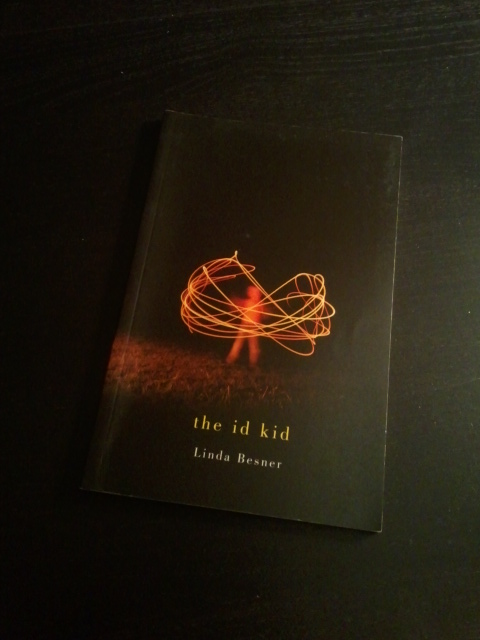
The Id Kid by Linda Besner

The Id Kid — Linda Besner

I like going to readings, but most of the time I go to see writers I already admire. But every now and then, I go and see writers I’ve never heard of, and sometimes end up discovering someone I really like. This was the case with Linda Besner. I saw her read at Harbourfront Centre a couple of years ago, and enjoyed her poetry so much that I bought a copy of The Id Kid and got Besner to sign it after the reading.

All the Pretty Horses by Cormac McCarthy

All the Pretty Horses — Cormac McCarthy

Cormac McCarthy’s All the Pretty Horses was one of the books on the docket for an American literature course I took in university. As with most of the books I was required to read, I picked up this copy at the campus bookstore. It was the first Cormac McCarthy book I read, and I liked it quite a bit. But it’s difficult to know if the impression it made on me was the writing itself or if it was because I noticed similarities to my grandfather’s life, as he was a cowboy in the time period the book is set in. When I finished the book, I told my grandfather about it, which opened up a dialogue about some of his other life experiences. I’m not sure I would have heard those stories otherwise.

Lullabies for Little Criminals by Heather O'Neill

Lullabies for Little Criminals — Heather O’Neill

Earlier this year, I borrowed Lullabies for Little Criminals by Heather O’Neill from the library. I enjoyed it so much that I kind of wanted my own copy, but it didn’t seem practical to go to the bookstore to buy a book I’d just read. When I found a used copy at a book sale a few months later for $1.50, I took it as a sign that it was meant to be mine.

A Glossary of Literary Terms by M. H. Abrams

A Glossary of Literary Terms — M. H. Abrams

While in university, many of my professors recommended A Glossary of Literary Terms, but it was never a required text for any of my courses. The number of recommendations made me curious, and I decided I needed to get my hands on it. When I looked for the book online, I learned it was out of print. So I went to eBay—where I often looked for things I wanted to buy in the early 2000s—and I bought a used copy. I ended up citing it in a lot of my English essays, too. I guess those professors really do know what they’re talking about.

Jude the Obscure -- Thomas Hardy

Jude the Obscure — Thomas Hardy

I bought Jude the Obscure at my neighbourhood bookstore, which is not much of a story. The more interesting (and perhaps a little embarrassing) story is why I decided to read this book in the first place. Years ago, I saw an interview with Jude Law on a late-night talk show. Law mentioned he was named after the main character in Hardy’s book, remarking that it was odd for his parents to name their son after a character who has such miserable experiences. And that sounded like a book I wanted to read. So I guess sometimes watching television can lead to reading more books.

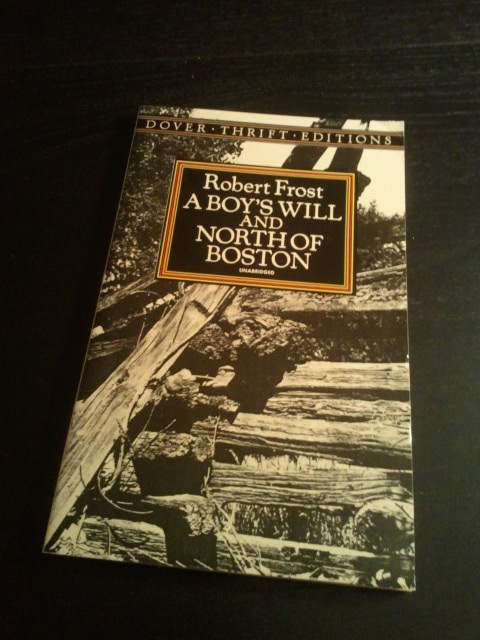
A Boy's Will and North of Boston -- Robert Frost

A Boy’s Will and North of Boston — Robert Frost

This book was given to me, but I’ve never met the gift-giver. The woman who gave me this book worked with my father when I was a teenager. I suppose my dad mentioned to her that I liked Robert Frost, and she gave him this book to pass on to me. I thought—and still think—that it was a very sweet thing to do.

Trainspotting -- Irvine Welsh

Trainspotting — Irvine Welsh

In high school, a friend gave me a copy of Irvine Welsh’s Trainspotting as a Christmas present. When I tried to read it, I had difficulty following because of the Scottish accent the book is written in. I ended up abandoning it, even though I absolutely loved the film. Years later, I realized that if I’d been able to tackle Chaucer, surely I could manage Welsh. I ended up liking the book even more than the film. I’m glad I gave this one a second chance.

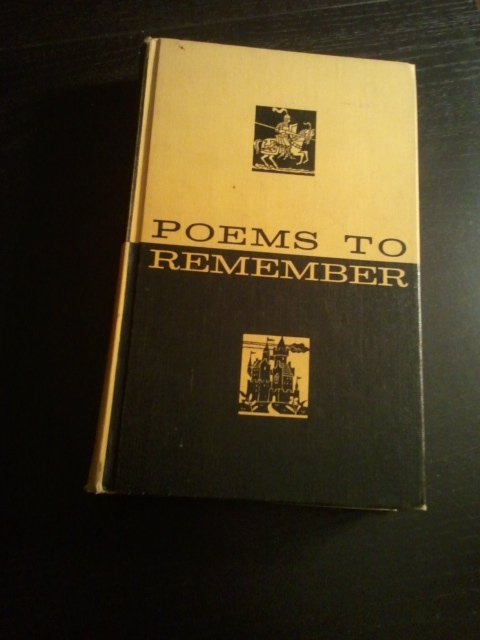
Poems to Remember

Poems to Remember

I grew up in a house that had a lot of books in it. It wasn’t uncommon for my parents, my brother or me to look through the family-room bookshelves for something to read. But a few of those books didn’t make it back to those shelves and ended up leaving the house when I did. You could say they’re stolen, but I prefer to say they are on extended loan. Besides, the name scribbled on the inside cover of this copy of Poems to Remember belongs to my uncle. Whether he gave it to my parents or whether they stole it before I stole it, I doubt my parents remember (or my uncle, for that matter).

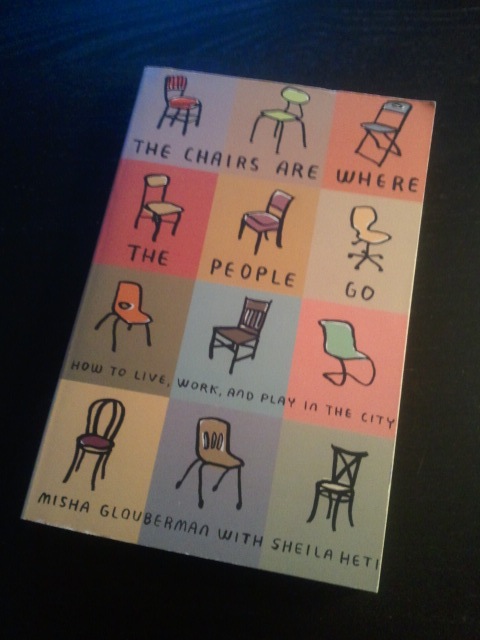
The Chairs Are Where the People Go -- Misha Glouberman and Sheila Heti

The Chairs Are Where the People Go — Misha Glouberman and Sheila Heti

Something that is really fun is when you win books. I haven’t won a lot of contests in my life, but the few times I have won mostly awarded me books. I won my copy of The Chairs Are Where the People Go from The Word on the Street book festival, when they ran a “guess the author” contest on Twitter a couple of years ago.

After looking over my shelves, I’ve realized my book collection needs more found books. If I take a trip to London, maybe I’ll find a book on the tube. It’s possible.

That time Charles Dickens became Morrissey


I came across this video via The Paris Review and I had to share it. Apparently it’s from a children’s TV show in Britain called Horrible Histories. Living in Canada, and not being much of an expert in the area of children’s television, I’d never heard of the program. But after viewing this video, in which Charles Dickens educates the audience about his life while imitating Morrissey (and using some of the singer’s lyrics), I’ve become a fan. I guess this just gives me one more thing to love about Britain.

My final trip to Nicholas Hoare Books

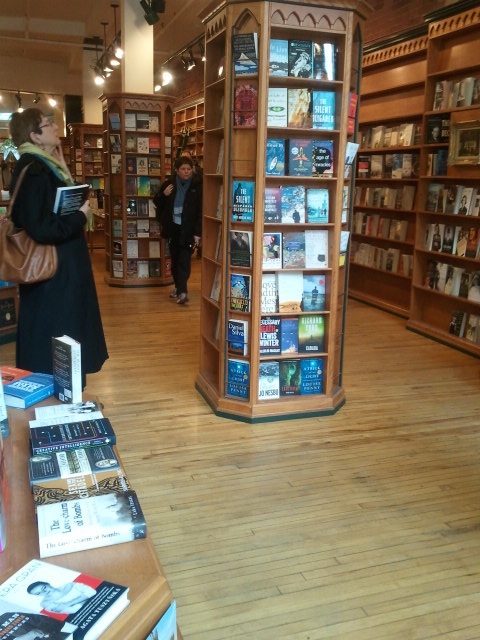
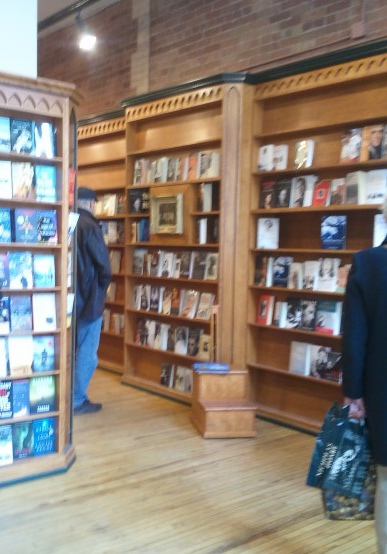
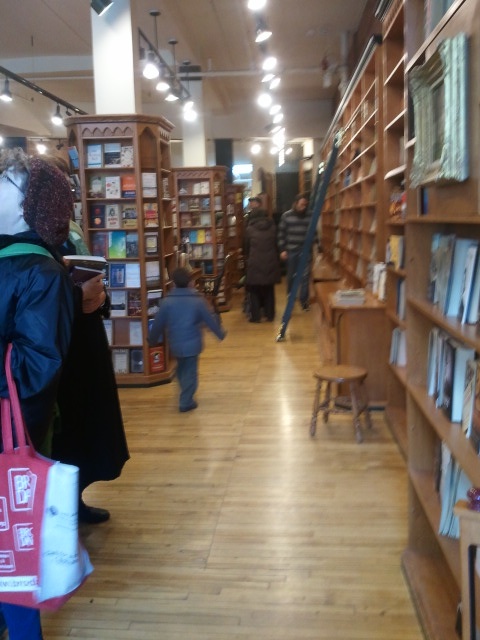
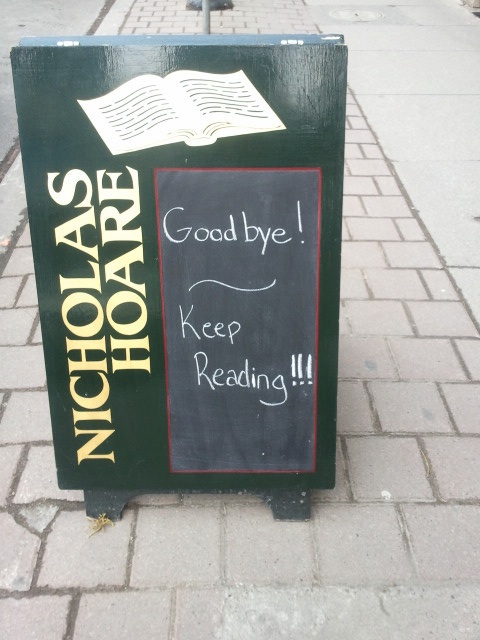
I know—I already wrote about the closing of Nicholas Hoare Books. But yesterday was the store’s last day of business, and it wouldn’t feel right if I didn’t share something about my final visit. So here are some pictures (and some words, too).

NH-exterior

SAMSUNG

There were quite a few people meandering through the store. I watched as they gathered their final purchases, said farewell to the staff and expressed their appreciation to Mr. Hoare himself.

SAMSUNG

The shelves have never looked so bare.

SAMSUNG

SAMSUNG

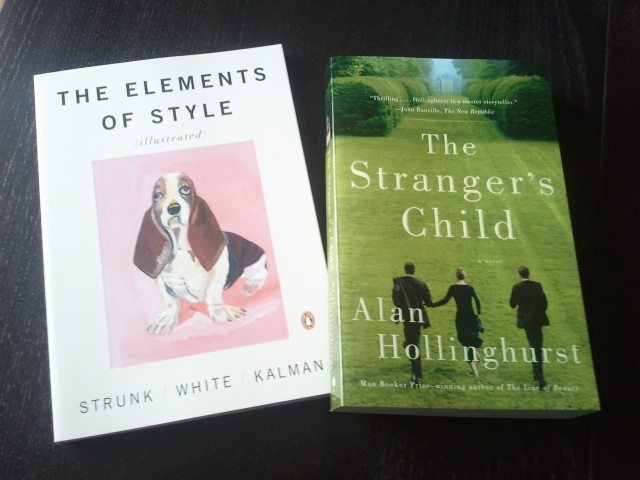
Even though nothing was discounted, several bibliophiles walked around with armfuls of books pressed against their chests. The measly two books I bought looked almost inadequate in comparison.

SAMSUNG

my final acquisitions

I’m used to finding a Nicholas Hoare bookmark tucked inside my purchase. Before I left the store, I looked in my bag to make sure one was there. After all, this would be the last time I’d receive a bookmark. I was happy to see the bookseller had slipped in a few.

SAMSUNG

bookmarks

I paused at the entryway before leaving, taking another look at all of the books and the people who were admiring them. I watched an elderly man seated by the window as he flipped through the pages of a hardcover. I watched a young boy as he rushed to find the children’s section at the back. I watched as customers and staff chatted and shared memories.

It was hard to walk out that door knowing it would be my last time doing so, but saying goodbye is never easy.

NH-sign

The rise and fall of Cuba Livres

There are many subjects I know little about, but one thing I do know is literature—or so I had thought. Earlier this week I attended CBC Books Trivia Night, and even though I went in with no expectation of winning, it was a humbling experience.

The night started with me and three friends huddled around a table in the corner of the back room at Clinton’s. We sipped our drinks as we waited to meet the author we would be paired with. There were many authors in attendance that night: Terry Fallis, Andrew Pyper, Kevin Sylvester, Dani Couture,  Andrew Kaufman, Tanis Rideout, Robert Rotenberg, Nora Young and Brian Francis.

As we waited, we tried to settle on a team name. A few suggestions were tossed around, but we didn’t seem capable of making a decision. The only decision we could come to was that we’d make our author choose. When Kevin Sylvester arrived at our table, he’d barely said hello and sat down when we informed him of his task. Not to worry; he was up for it. After giving him our short list, it was decided: we were Cuba Livres.

All of us—Mr. Sylvester included—made a point of saying we didn’t think we’d win. In my mind, this was confirmed when I realized the room was filled with people who worked in bookstores, publishing houses and literary agencies. Yep. We were screwed. But we were there to have fun; winning didn’t matter.

The quiz had three rounds. After the first round, our team was tied for the top spot, which was much to our surprise. To be fair, I must give Mr. Sylvester some credit. He won a lot of those points for us. But, suddenly, winning the whole thing didn’t seem like such an impossibility. Could we actually have a chance at victory?

Unfortunately, that was the closest we came to the top. Our scores for the second and third rounds were much worse than the first. Most of our answers were guesses.

At the end of the evening, host Garvia Bailey announced the winners. We didn’t win the quiz. We didn’t win for best team name. We didn’t win any door prizes.

But we didn’t leave empty-handed. Each Cuba Livres team member received a copy of Mr. Sylvester’s book Neil Flambé and the Tokyo Treasure.


I might be a little older than the book’s target demographic, but I’m still looking forward to reading it.

It was a fun evening, especially for people who love books, trivia and the CBC as much as I do. I recommend coming out next year. But if you’re hoping to win, you might want to start studying now.