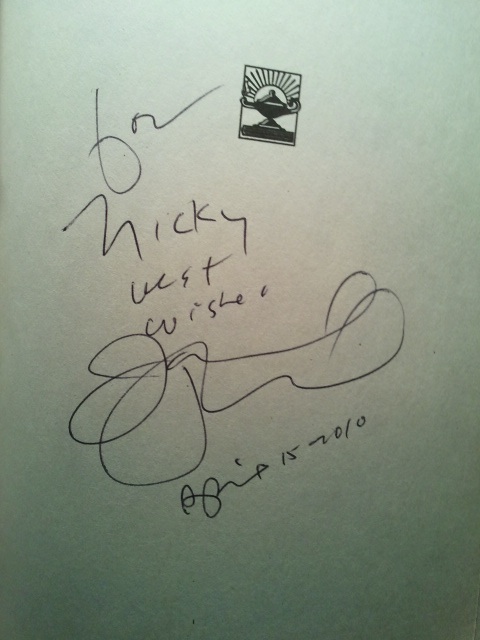
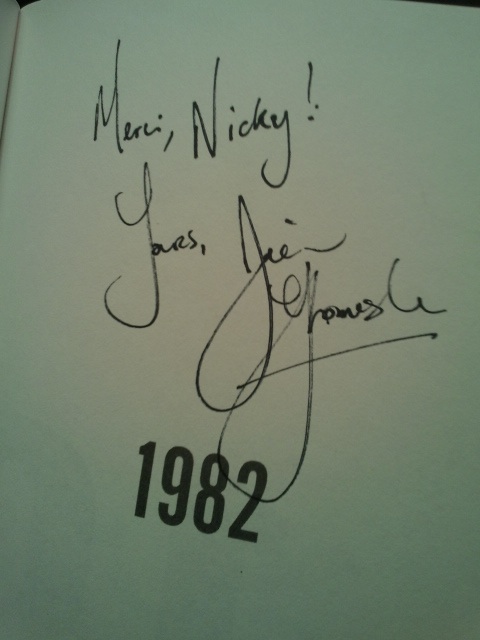
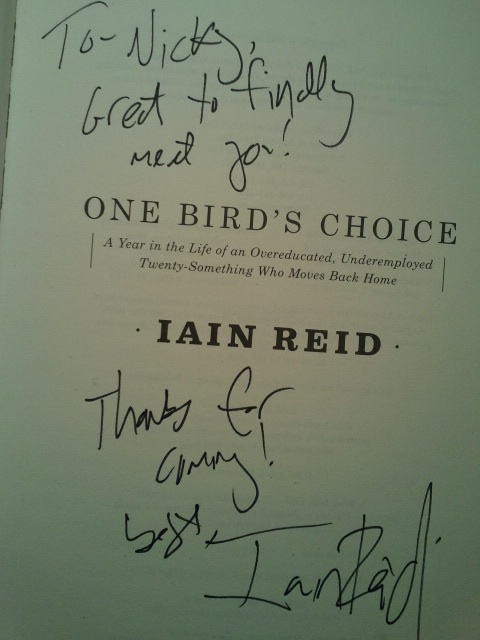
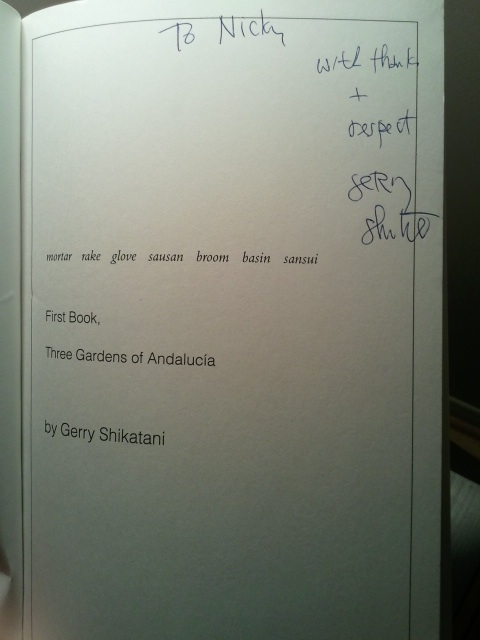
Books and handwriting: two of my favourite things together!


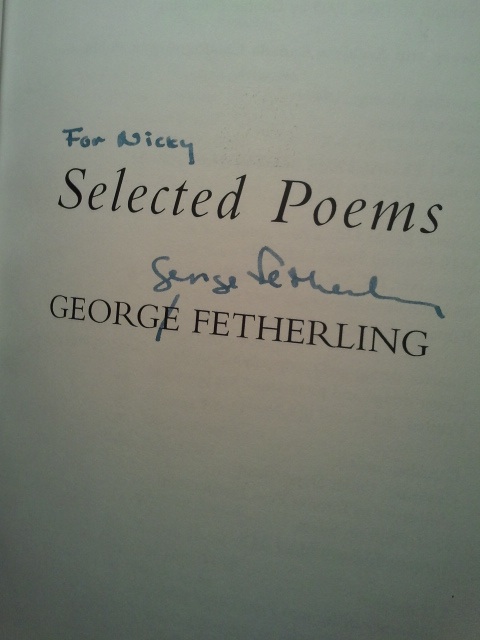
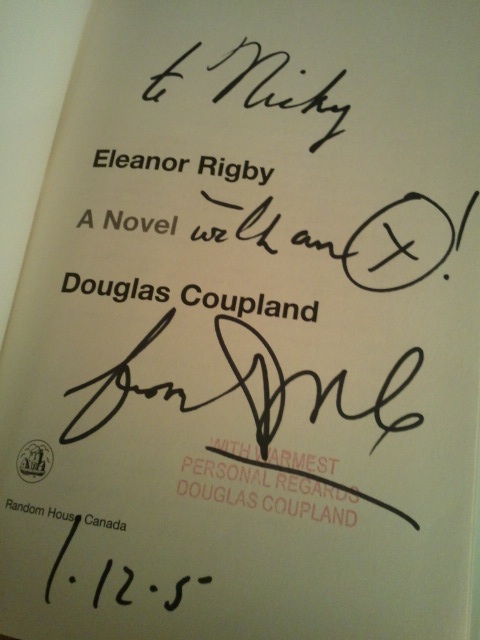
Books and handwriting: two of my favourite things together!
One of my favourite bookstores is closing. If you live in the Toronto area, particularly if you’re interested in books (and you probably are, if you’re reading my blog), you might have heard that Nicholas Hoare is retiring and will be closing his flagship store on April 1.
I can’t remember how old I was when I first visited Nicholas Hoare, but I do remember the impression it made on me. The warm lighting and the beautiful displays of books against the wooden shelves mesmerized me. Now, whenever I open that door and walk up those few steps, when I hear the creak of the floorboards, the classical music, when I walk by the fireplace–it all feels so welcoming and comfortable. And it might help that the store specializes in British books, as I admit to being a bit of an anglophile.
The quietness of the store has its appeal, too. I’ve always loved listening to other people discuss books. With these kinds of conversations, it somehow seems okay to eavesdrop or to jump in with a comment.
When I think of some of the books I’ve purchased from the store in the past year, I can’t think of one that was disappointing. I’m not sure if this is due to fine selection by the staff, or just some magical luck, but the books that immediately come to mind were all enjoyable: David Sedaris’ Me Talk Pretty One Day, Jeremy Mercer’s Time Was Soft There, Tom Rachman’s The Imperfectionists, Alix Ohlin’s Inside, Mary Horlock’s The Book of Lies, Ernest Hemingway’s A Moveable Feast.
It was at Nicholas Hoare where I found a beautiful copy of Philip Larkin’s The Whitsun Weddings that I gave to my father for his birthday one year. I’ve shopped for books for my cousin’s daughter in the children’s section at the back of the shop, and I’ve purchased various Christmas presents for friends and family here. And, of course, there have been those occasions when I’ve come in just to browse.
Near the end of 2012, I attended an in-store event where Nicholas Hoare presented some of his favourite books of the season. I feel fortunate to have had the chance to hear Mr. Hoare speak in person, as his passion for books was certainly evident.
I wish Mr. Hoare a happy retirement, and I thank him and his wonderful staff for all of their hard work. I’ll miss this store quite a bit, more than I thought I could miss a bricks-and-mortar shop, probably because it’s been much more than merely bricks and mortar.
It’s September, which means the neighbourhood children have gone back to school. It also means I’m reminiscing about school more than usual. Actually, it’s a bit odd that I ever reminisce about school. Until I got to university, I hated going to class. Oh, I always loved to learn, but I think it was the forced socialization that wasn’t for me. Since I had to be there, though, I was lucky to have some good teachers. My favourite was Mrs. Sedore.
I was in Mrs. Sedore’s class for grades three and four. Both grades were spent in the same classroom (room 13), so those years sort of blend together in my memory. Mrs. Sedore had a great way of explaining concepts and a sense of humour that I really appreciated. But the real reason Mrs. Sedore made such an impression on me is because she nurtured my love of reading and writing.
Mrs. Sedore encouraged my creative writing, saying I had a wonderful imagination and that my stories deserved to be shared with others. She always said these things in a very believable way.
It was during these years that I remember, as a class, analyzing stories for the first time. In particular, I remember reading and discussing That Scatterbrain Booky.
It’s difficult to know how much Mrs. Sedore influenced me. It’s occurred to me that I simply might’ve been at an age when one learns what they’re interested in and where their aptitudes lie. The fact that Mrs. Sedore was my teacher could have had little to do with how I felt then, and how I feel now, about reading and writing. But I’m not convinced that’s true. I think if I’d had a teacher who didn’t recognize my interests, he or she might have squashed them, however inadvertently.
I recently read a quote from one of my favourite writers, Douglas Coupland. He wrote, “A good teacher is someone who taught you what to love. A bad teacher is someone who taught you what to hate.” And I think that explains why Mrs. Sedore was such an excellent teacher.
As this school year gets underway, I hope all of you teachers will get to know your students, even the quiet ones, and recognize what sparks a flame in each of them. I hope you’ll do your best to encourage that flame to keep burning. Your students will grow up being forever grateful for it.
I recently returned from a brief stay in Boston. It was my first time visiting the charming city, and there was a lot to see and do (certainly more than I had time for). I tasted some delicious seafood, watched whales swim off into the sunset in the middle of the ocean and wandered leisurely through many beautiful public spaces. But the sojourn also had a noticeable literary angle.
On my first full day, I visited the Boston Public Library. I was impressed with the building’s design. One of my favourite areas was the Bates Hall Reading Room. It was gorgeous and quiet and serene. I could have stayed there all day.

Bates Hall Reading Room at the Boston Public Library
As I peeked through one of the building’s windows, I was pleasantly surprised to discover the library’s courtyard. Later on I took the opportunity to go downstairs and wander around in it.

courtyard at the Boston Public Library
I stopped by the rare books section of the library. The featured exhibit was on Robert Browning, with some focus on his relationship with Elizabeth Barrett Browning. I thought it was neat to see their marriage certificate up close.
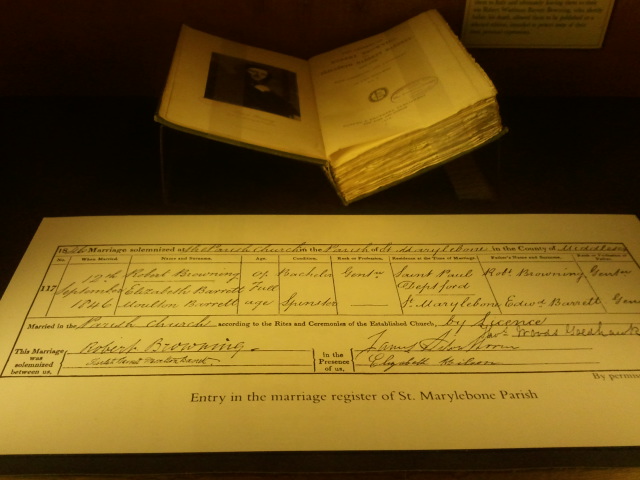
Robert Browning and Elizabeth Barrett Browning’s marriage certificate displayed in the Boston Public Library
Lucky for me, a literary landmarks walking tour was scheduled to take place during my stay. The tour started on the oldest street corner in Boston, near the building that used to be the Old Corner Bookstore. Not only was this building a bookstore, but it was also a publishing house. This is where books such as Walden and The Scarlet Letter were published. It’s now a Chipotle Mexican Grill.

What was once a bookstore and a publishing house is now a Chipotle Mexican Grill.
The tour stopped by houses that were once lived in by such literary figures as Henry James, Henry David Thoreau, Nathaniel Hawthorne and Louisa May Alcott. But I didn’t take many pictures of these houses. I was too busy imagining myself living in a different time.
Throughout my visit, I took the chance to browse in some of the bookstores I stumbled across. I especially enjoyed looking at books in the open air…and looking up at this neat mural. (I don’t remember the name of this bookstore, though.)

outdoor book-browsing
I told myself that I would only browse, and that I wouldn’t buy anything. But then I decided I’d let myself purchase one book. After all, it would be nice to have a souvenir. I thought Walden was appropriate enough. I picked up a copy at the Harvard Book Store.

Harvard Book Store

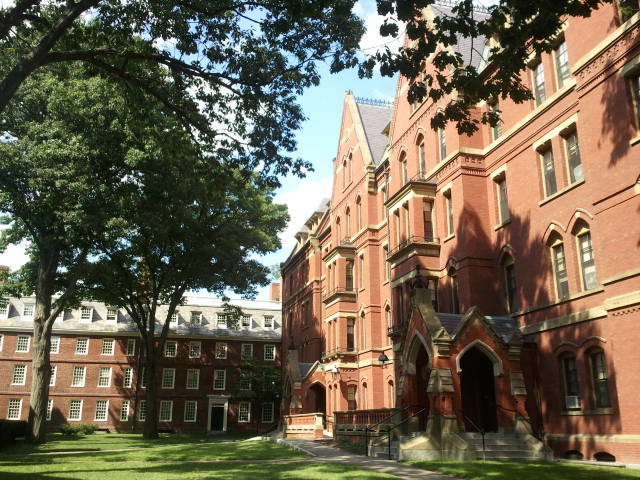
Harvard University
The trip had a great balance of activities and opportunities to relax. There was ample time to sit back with a book and some lovely settings in which to do so.

Public Garden
Yeah, I’d say Boston and I will meet again one day.
I’ve got Paris on my mind.
About a month ago, I picked up a book called Time Was Soft There by Jeremy Mercer. I was browsing in one of my favourite bookstores when I saw it. I had never heard of the book before, but the subtitle caught my eye: “A Paris Sojourn at Shakespeare & Co.” The memoir is about one Canadian writer’s experience living and writing above the famous bookstore.
I’ve spent some time writing in Paris as well. All right—my experience was nothing like Mercer’s. I was in Paris for a brief time in 2007. For the second half of September, I wandered the city streets, visited landmarks and ate pastries. But, maybe because I went alone, I ended up writing a lot, too. I took a notebook with me everywhere I went. I wrote from the lookout of the Eiffel Tower. I wrote under a tree in Père Lachaise Cemetery. I wrote in quaint cafés and on benches that line the Seine.
I made a point of visiting Shakespeare and Company, too, and was entranced by the store’s beauty and by the amount of books surrounding me. But at that time, I was unaware there were writers living upstairs, typing and scribbling away as I shopped below.

before entering the shop in September 2007
Since finishing Time Was Soft There, I’ve read a few other books that are set in Paris. Sometimes it was because of a conscious effort (Hemingway’s A Moveable Feast, Orwell’s Down and Out in Paris and London). Other times, it was a coincidence (David Sedaris’s Me Talk Pretty One Day). I just can’t seem to kick my Paris habit. At least not yet.
I don’t believe anyone has to go to Paris in order to write. And I know the idea is a cliché. But the romantic in me can’t help but dream about living and writing in one of the most beautiful cities in the world.
 Finding the Words